Building a Homeschool Portfolio From Everyday Work
Creating a homeschool portfolio doesn’t require polished presentations or artificial projects. Instead, it grows naturally from daily learning. For families using Roovet Academy’s flexible resources, organizational tools and course options are available to support consistent documentation of authentic student work over time. A strong portfolio reflects real progress—math problems solved, essays revised, science experiments recorded—not just final products. This article walks through how to document ordinary learning in a way that shows growth, meets state requirements where applicable, and supports long-term academic planning.
Why Portfolios Matter Beyond Compliance
Some states require periodic portfolio reviews as part of homeschool oversight. But even in places without formal rules, maintaining a portfolio helps families track progress, identify learning gaps, and prepare for future academic or extracurricular opportunities. Unlike standardized test scores, portfolios show the process: how a student approaches challenges, revises work, and builds skills incrementally.
Portfolios also empower students. When learners see a record of their own drafts, corrections, and reflections, they gain insight into their development. This is especially valuable in middle and high school, when academic identity begins to take shape.
What Belongs in a Homeschool Portfolio?
A portfolio isn’t a scrapbook. It’s a curated collection of work that demonstrates learning across subjects and time. Include a mix of:
- Writing samples showing development (e.g., first draft and final version of a history essay)
- Math problem sets with explanations, especially those showing new methods applied
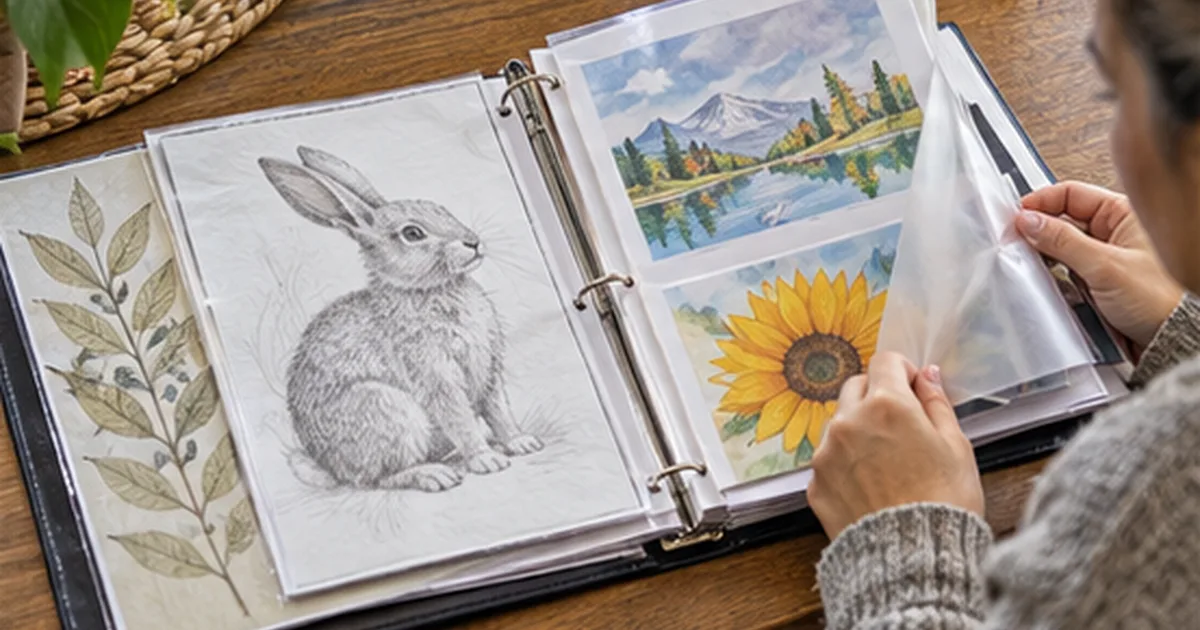
- Project notes, sketches, or photos from science or art projects
- Reading logs or book summaries
- Self-assessments or learning reflections
Exclude completed worksheets with no annotations. A blank math sheet tells little. But a page where a student corrected errors in red, added notes in the margin, and wrote a short reflection on what they learned? That’s portfolio-worthy.
Example: Documenting a Math Progression
Consider Lena, age 13. In September, she struggled with multi-step equations. Her notebook shows crossed-out attempts, a teacher’s marginal note (“Try isolating the variable first”), and a revised solution. By November, she solves similar problems independently. By February, she teaches the method to her younger brother in a recorded video clip saved to her portfolio.
The portfolio includes:
- September: Original problem set with corrections
- October: A short written explanation of the steps she now uses
- February: The video clip (transcribed briefly in the log)
This sequence shows not just mastery, but metacognition—Lena thinking about how she learns. No external test could capture that depth.
Three Realistic Portfolio Snapshots Over Time
Portfolios evolve. Here are three dated examples from hypothetical learners, illustrating how documentation shifts with age and focus.
Sample 1: Early Elementary (June 2023)
Child: Mateo, age 7 Subjects: Reading, handwriting, basic math
Mateo’s portfolio for this period includes:
- A photo of him reading aloud to his dog, with a parent note: “Read 12 pages of Frog and Toad Are Friends with 90% accuracy.”
- Three handwriting worksheets, showing improvement in letter formation over four weeks.
- A drawing of a “math story”: six apples on a tree, two falling, and the equation 6 – 2 = 4 written below.
- A short audio recording of him explaining how he solved a word problem.
At this stage, the portfolio emphasizes effort and engagement. The goal isn’t perfection but evidence of consistent practice and growing confidence.
Sample 2: Middle School (January 2024)
Child: Aisha, age 12 Subjects: Life science, pre-algebra, narrative writing
Aisha completed a four-week study of ecosystems. Her portfolio includes:
- A labeled diagram of a pond ecosystem she drew from observation during a family hike.
- A 500-word essay on food chains, with tracked changes showing three rounds of revision based on parent feedback.
- A spreadsheet log of daily temperature and wildlife sightings from her backyard, used in a math lesson on averages.
- A photo of her building a model wetland in a recycled aquarium.
Her math section shows a problem set on fractions, one of which she initially solved incorrectly. She wrote a note: “I forgot to find a common denominator. Now I use the butterfly method.” This self-correction is more valuable than a perfect score.
Sample 3: High School (May 2024)
Child: Jordan, age 16 Subjects: U.S. history, chemistry, creative writing
Jordan’s portfolio supports a self-designed course on civil rights and social change. It includes:
- A research paper comparing the Montgomery Bus Boycott and the 2011 Arab Spring, with annotated sources and a bibliography.
- Laboratory notes from a home chemistry experiment testing pH levels in household liquids, including safety precautions taken.
- Three original poems inspired by historical figures, with peer feedback from an online writing group.
- A time log showing 45 hours of work over eight weeks, aligned with standard credit expectations.
Jordan also included a one-page reflection: “I used to think history was just dates and names. Now I see how people’s choices create ripple effects. That changed how I read the news.” This kind of insight is exactly what a portfolio should capture.
How to Organize Work Without Overwhelming the Routine
The biggest barrier to consistent portfolio building is perceived effort. But integration into daily practice reduces burden. Try these strategies:
Use a Weekly Review Session
Set aside 20 minutes each Friday. Review the week’s work with your student. Ask: “What piece shows the most improvement? What was hardest? What would you like to save?” Let the student choose one item to add to the portfolio. This builds ownership and reduces parental workload.
Adopt a Simple Naming Convention
Save files with clear names: 2024-04-12_Aisha_Ecosystem_Diagram.jpg or 2024-03-05_Jordan_Civil_Rights_Outline.docx. A consistent format makes retrieval easy during reviews or transitions to other programs.
Balance Digital and Physical Formats
Keep a labeled binder for physical work. Use a secure cloud folder for digital files. For large projects (e.g., a diorama), photograph it and store the image with a brief description. Rotate items seasonally—keep only the most representative pieces from each term.
What to Exclude (and Why)
Not every assignment belongs. Avoid:
- Worksheets with no corrections or notes
- Duplicate samples of the same skill without progression
- Commercial curriculum brochures or syllabi (unless required by your state)
- Unverified claims of “mastery” without supporting work
Also, do not include third-party certifications or transcripts unless issued by an official institution. Roovet Academy does not issue transcripts or accredit programs. The portfolio’s strength lies in its authenticity, not external validation.
Using Portfolios for Academic Planning
A well-kept portfolio isn’t just for review—it’s a planning tool. At the end of each semester, review it with your student. Look for patterns:
- Are writing samples becoming more detailed? Is revision becoming more thorough?
- Is math fluency improving, or does a concept need reteaching?
- Are student-chosen topics shifting toward specific interests (e.g., marine biology, coding)?
For example, when reviewing Aisha’s portfolio, her parents noticed her science projects were consistently ecology-focused. They adjusted the next term’s plan to include more fieldwork and introduced a local nature journaling group. The portfolio didn’t just document learning—it guided it.
Adjusting Based on Evidence
Jordan’s early drafts of poetry were abstract and hard to follow. But by May, his poems included clearer imagery and emotional depth. His parents used this to suggest a creative writing course, which he explored through available learning platforms. The decision was based on tangible work, not assumptions.
Common Misconceptions About Homeschool Portfolios
Several myths persist:
“It Needs to Look Professional”
No. A portfolio should reflect real work, not a marketing brochure. A messy draft with insightful corrections is better than a flawless final copy with no context.
“Only Finished Projects Count”
False. The learning process often matters more. A failed experiment with detailed notes shows scientific thinking. A revised essay shows growth in writing. Include works in progress when they reveal effort or insight.
“We Need an Accredited Program”
Accreditation applies to institutions, not individual homeschools. No U.S. state requires a homeschool to be accredited. Some families enroll in umbrella schools or online programs for support, but accreditation doesn’t affect a student’s ability to apply to college or earn credit. Credits are awarded by the parent or school, not by an accrediting body.
Preparing for External Reviews
If your state requires an annual review, prepare by summarizing key pieces. Write a one-page narrative covering:
- Subjects studied
- Resources used
- Student progress and challenges
- Goals for the next term
Attach 5–7 representative work samples. Focus on growth, not volume. A reviewer reading your summary and examining the samples should quickly grasp the student’s trajectory.
Example Review Package: Lena (Age 13)
Summary includes:
- “Studied algebra fundamentals using problem sets, video tutorials, and real-world applications.”
- “Improved from needing step-by-step guidance in September to solving multi-step equations independently by March.”
- “Next term: Introduce linear graphing and apply math to budgeting projects.”
Attached samples:
- September: Corrected quiz on solving for x
- November: Word problem set with written explanations
- February: Video still and transcript of peer teaching moment
This package tells a clear story of progression.
Final Thoughts: Portfolios as a Living Record
A homeschool portfolio is most powerful when it’s ongoing, honest, and student-informed. It’s not about proving something to outsiders—it’s about understanding and guiding learning from within. By building it from everyday work, families create a resource that supports both compliance and deeper educational goals. Start small, focus on consistency, and let the student’s voice grow alongside their skills.
Explore Roovet Academy’s homeschool program.