Starting Sixth Grade Online: Organize Your First Two Weeks
Beginning sixth grade in an online format requires more than just logging in—it calls for intentional structure, clear expectations, and daily rhythms that support independence. This guide walks families through a realistic two-week launch plan, using hypothetical but representative scenarios to illustrate decision-making, pacing, and troubleshooting. While Roovet Academy offers flexible course options, the strategies here focus on organizing time, setting routines, and responding to early feedback—regardless of platform.
Day 1: Map the Week Ahead
Start by reviewing all course syllabi or weekly outlines. Assume you’re helping Maya, a 12-year-old starting her first year of middle school online. She’s enrolled in math, science, language arts, and history through an independent provider. Her family prints the weekly schedule and posts it on the refrigerator.
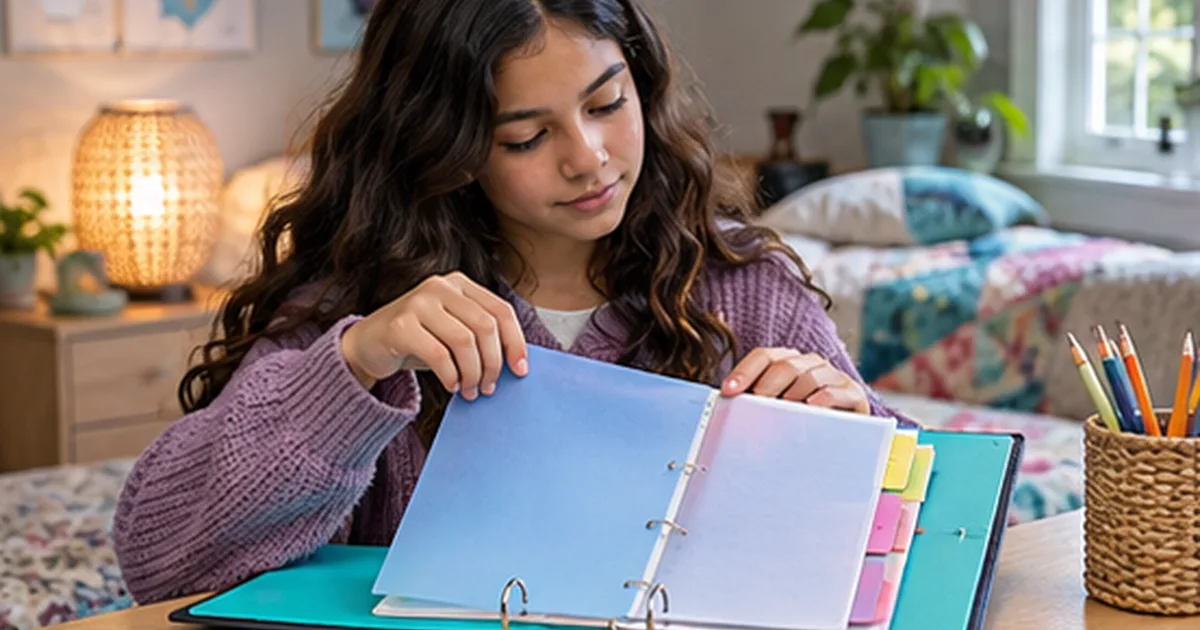
Break down assignments by due date. For example, if math has four lessons due Friday, divide them across Monday through Thursday. Assign each lesson a color-coded sticky note on a wall calendar. This visual tracking helps Maya see progress and prevents last-minute rushes.
Set up a dedicated workspace. Use a folding table in a quiet corner, stocked with notebooks, pens, and a device charger. Label folders by subject. On day one, Maya and her mom spend 20 minutes organizing supplies and testing the internet connection. They also bookmark the login page and save teacher contact information in a family notebook.
Day 2: First Math Lesson and Immediate Feedback
Begin with a core subject like math to build momentum. Maya’s first assignment is an introductory module on ratios. She watches a 12-minute video lesson, completes five practice problems, and submits a short quiz.
After submission, she reviews the automated feedback. One problem was incorrect: she wrote 3:9 instead of 1:3. Her mom asks, "What does the colon mean in a ratio?" Maya explains it’s like a fraction. They reduce 3/9 together to 1/3. This quick correction reinforces understanding and models how to learn from errors.
Log the time spent: 38 minutes. Record it in a weekly log. This helps track pacing. If future lessons consistently take longer, adjustments can be made early.
Day 3: Introduce a Reading Tracker
Language arts often includes independent reading. Maya is expected to read 30 minutes daily and submit weekly summaries. On day three, she chooses a novel from her school’s approved list: The City of Ember by Jeanne DuPrau.
Create a simple tracker. Use a notebook page with columns: Date, Pages Read, Summary (2-3 sentences), and New Words. After reading chapters 1–2, Maya writes: "Two kids, Lina and Doon, live in an underground city with failing lights. They’re curious about what’s outside." She lists "generator" and "blackout" as new vocabulary.
This tracker becomes a reference for weekly writing assignments. It also shows effort over time, useful if motivation dips later.
Day 4: Science Lab Prep and Materials Check
Some science courses include hands-on activities. Maya’s first lab involves testing soil types. The supply list includes potting soil, sand, a measuring cup, and four small containers.
On day four, gather materials. If potting soil isn’t on hand, substitute with garden soil. Label containers A–D. Write the procedure in steps: "1. Fill each container with one soil type. 2. Add 100 mL water. 3. Measure drainage after 10 minutes."
Doing this prep early prevents frustration. It also gives Maya ownership. She draws the setup in her lab notebook before conducting the experiment the next day.
Day 5: First Full Workflow Test
By day five, aim for a full mock week. Complete one assignment in each subject. Maya finishes:
- Math: Lesson 2 on equivalent ratios (35 minutes)
- Science: Conduct soil lab and record data (45 minutes)
- Language Arts: Read 30 minutes and update tracker
- History: Watch a 10-minute video on ancient Mesopotamia and answer two questions
After each task, she checks it off a to-do list. At day’s end, she spends 10 minutes organizing her desk and charging devices. This routine reinforces closure and readiness for the next day.
Weekend Reflection: Adjust for Week Two
Use Saturday morning for a 20-minute family meeting. Ask: What took longer than expected? What felt manageable? Maya notes that the science lab took longer because she had to wait for water to drain. Her mom suggests setting a timer next time.
They adjust the next week’s plan: move longer labs to mornings when focus is high. They also decide to try listening to instrumental music during independent work, based on Maya’s comment that the house felt too quiet.
Day 6: Refine the Schedule
Based on week one, tweak the daily rhythm. Now that they know math lessons average 35–40 minutes, they block 45-minute slots with a 15-minute buffer. They shift reading to after lunch, when Maya says she’s more relaxed.
Introduce a "focus goal" for the week: complete assignments without reminders. Use a sticker chart. Each self-initiated task earns a star. Five stars by Friday mean a family movie night.
Day 7: First Writing Draft
Many sixth-grade courses require short essays. Maya’s prompt: "Describe a time you solved a problem." She brainstorms three ideas: fixing a bike chain, helping a lost dog, and figuring out a math puzzle.
She chooses the bike story. Using a graphic organizer, she outlines: introduction (setting and problem), two steps taken (looked up video, asked neighbor), and result (bike fixed, felt proud). She drafts one paragraph, then reads it aloud to her dad.
He asks, "What made you think to check the chain?" She adds a sentence about noticing the noise. This feedback loop improves detail and voice—skills emphasized in her course rubric.
Day 8: Math Progress Check
After completing four lessons, Maya takes a short quiz covering ratios and unit rates. She scores 80%. Two questions involved word problems with mixed units—like converting inches to feet within a ratio.
They analyze errors. One question: "A model car is 6 inches long. The real car is 15 feet long. What is the ratio?" Maya wrote 6:15. The correct approach is to convert feet to inches: 15 feet = 180 inches, so 6:180 = 1:30.
They create a reference card: "Always check units. Convert to the same unit before simplifying." This becomes part of her math folder—a personalized tool for future problems.
Day 9: Science Observation Journal
Maya’s second lab compares plant growth under different lights. She planted bean seeds in identical pots, placing one under sunlight, one under a lamp, and one in a dark closet.
On day nine, she records observations: "Sunlight pot: 1 cm sprout. Lamp pot: 0.5 cm. Dark pot: no change." She sketches each pot and writes one sentence about possible reasons.
This builds scientific habits: consistency, detail, and inference. Her notes will support a written conclusion in week three.
Day 10: Peer Interaction Practice
Online learning can feel isolating. Some families arrange virtual study sessions. Maya’s mom connects with another parent whose child is in the same history course.
They schedule a 30-minute Zoom call. The kids review notes on ancient Egypt and quiz each other. One asks, "What was the purpose of the pyramids?" The other responds, "Tombs for pharaohs and storage for goods."
No grades are at stake—just low-pressure conversation. This builds confidence for future discussions and reduces anxiety about speaking up.
Day 11: Math Pacing Adjustment
Maya’s original plan was to finish four math lessons in eight days. But lesson four took 50 minutes due to complex word problems. At this rate, she’ll fall behind.
The family decides: slow down to three lessons per week but deepen understanding. They’ll spend extra time on problem-solving strategies, like drawing diagrams or making tables. This trade-off prioritizes mastery over speed—a sustainable choice for long-term success.
Day 12: First Full Draft Submission
Maya submits her problem-solving essay. She revises it based on earlier feedback: added sensory details ("grease on my hands"), clarified sequence ("first I cleaned, then I oiled"), and fixed run-on sentences.
She uploads the file and confirms receipt. A checklist ensures nothing is missed: title, name, date, double-spacing, and saved in .docx format. Submitting correctly matters as much as content.
Day 13: Science Data Review
After two weeks of plant observations, Maya graphs her data. She creates a bar chart showing average sprout height per condition. Sunlight: 1.8 cm. Lamp: 0.9 cm. Dark: 0 cm.
She writes a claim: "Plants grow best with sunlight." Then lists evidence: "The sunlight group had the tallest sprouts." Finally, reasoning: "Sunlight provides energy for growth, while artificial light may not be as strong."
This structure—claim, evidence, reasoning—is common in middle school science. Practicing it early builds confidence for future labs.
Day 14: End-of-Week Review and Reset
On the final day, conduct a full review. Gather all completed work: math quizzes, reading logs, science notes, and writing drafts. Place them in labeled subject folders.
Ask three questions:
- What assignment was most challenging? (Maya says math word problems)
- What routine worked best? (She liked checking off tasks)
- What’s one change for next week? (Try working at the library one day for a change of scene)
Then reset the workspace: clear the desk, reload notebooks, charge devices. End with a brief celebration—a smoothie or walk—to acknowledge effort.
Building Sustainable Habits
The first two weeks lay the foundation for the year. Success isn’t measured by perfection, but by consistent effort and thoughtful adjustments. Maya’s family learned that pacing matters more than speed, that feedback is a tool, and that small routines compound over time.
They now check the weekly plan every Sunday evening. They keep the error log in math and the reading tracker active. They’ve scheduled two virtual check-ins with another student.
By treating the launch as an iterative process—not a one-time setup—they build resilience. When a future assignment feels overwhelming, they refer back to how they solved early challenges. This history becomes a quiet source of confidence.
Final Notes for Families
Remember: online learning is flexible, but structure enables that flexibility. Use calendars, checklists, and reflection moments to stay grounded. Monitor time, not just task completion. And when in doubt, simplify—focus on one subject, one day, one step at a time.
For families exploring curriculum options, Roovet Academy provides resources for homeschooling families, including course outlines and planning tools. The real work, however, happens in the daily choices—to review, to adjust, to keep going.
Explore Roovet Academy’s math 6 course.