What Does Online High School Cost Beyond Tuition?
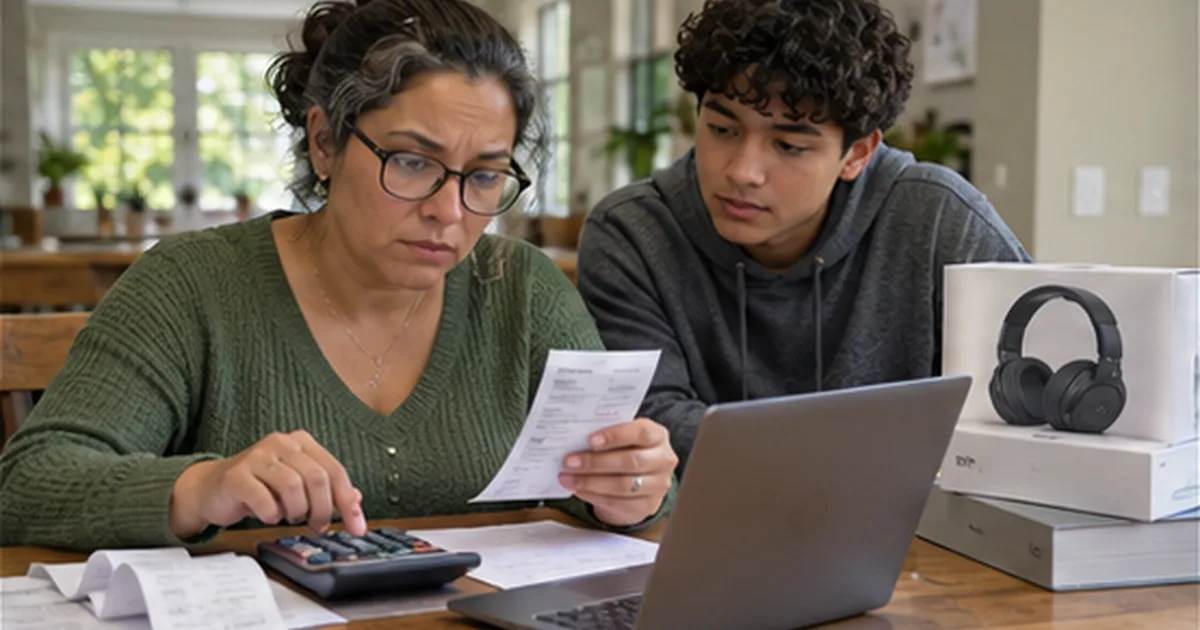
Write the tuition figure at the top of a page and leave room beneath it. A family might already own a suitable computer but still need supplies, a repair allowance, or a way to cover a course-specific expense. Comparing two schools on the same list of costs makes it easier to see what the quoted price actually includes.
For accurate information about course offerings and learning formats, families can review Roovet Academy’s course catalog, which outlines subject areas and instructional approaches. The examples that follow are illustrative and based on common real-world scenarios, not endorsements or guarantees of outcomes.
Technology: The Foundation of Online Learning
Reliable technology is non-negotiable in online education. Without it, even the most comprehensive curriculum becomes inaccessible. Most online high schools expect students to have a functioning computer, stable internet, and basic peripherals. But what does that actually cost?
Consider Maya, a 10th grader starting her first year in a fully online program. Her family already owns an older laptop, but it struggles with video conferencing and freezes during science simulations. Upgrading to a mid-range Chromebook or Windows laptop—adequate for coursework, video calls, and research—ranges from $300 to $500. If a family doesn’t already own a suitable device, this becomes an immediate, non-recurring expense.
Internet access is recurring. Families in urban or suburban areas may already have broadband, but rural households might need satellite internet or mobile hotspots, which cost $60–$100 monthly. Even with existing service, peak-hour congestion can disrupt live classes. A dedicated connection for learning—separate from gaming or streaming—can justify a service upgrade costing an extra $20–$30 per month.
Other tech-related costs include:
- Printer and ink: $150 annually (for labs, reading logs, or art submissions)
- Headset with microphone: $40–$70
- External hard drive or cloud storage subscription: $60/year
- Software licenses: Some advanced courses require specific programs (e.g., CAD software for engineering electives)
For Maya’s family, total first-year technology investment reaches $750, with recurring annual costs of approximately $240 for internet and storage subscriptions.
Curriculum Materials and Lab Kits
While many online schools provide digital textbooks, some courses require physical materials. Science classes, in particular, may mandate lab kits. These are often shipped directly to the student and can cost between $50 and $150 per course. For example, a biology lab kit might include microscope slides, safety goggles, pH strips, and specimen samples.
Take James, a 9th grader enrolled in both biology and chemistry. His family receives two separate kits totaling $220. Additionally, the chemistry course recommends a home lab safety bundle—gloves, apron, goggles—for another $35. These are one-time costs, but families must budget for them before the term begins.
Other subjects may also require physical components:
- Art courses: Sketchbooks, paints, or clay kits ($40–$100)
- Music: Instrument rental or purchase (e.g., digital keyboard for $200)
- Home economics: Cooking supplies for nutrition labs (ingredients not reimbursed)
James’s family spends $275 on materials in year one. They anticipate similar costs if he takes advanced science electives in later years.
Time Investment: The Unseen Family Cost
One of the most significant yet invisible expenses is time—particularly for parents or guardians acting as learning coaches. Online high schools vary in how much supervision they require. Some are fully independent; others expect weekly check-ins, assignment tracking, or proctored exams.
For example, 11th grader Sofia has ADHD and benefits from structured oversight. Her mother reduces her part-time work hours by 10 per week to help with time management, assignment tracking, and emotional regulation during challenging weeks. At $15/hour, that’s a $3,120 annual income reduction—real money, even if not paid to a third party.
Other time-related costs include:
- Attending virtual parent-teacher conferences
- Coordinating proctored exams (driving to a testing center or arranging a qualified proctor)
- Researching supplementary resources when a concept isn’t clear
- Managing deadlines across multiple courses
While not a direct monetary outlay, time is a finite family resource. Its value should be acknowledged in any cost analysis.
Extracurricular and Social Engagement
Many families overlook the cost of replacing traditional school experiences. In-person clubs, sports, and field trips are often included in brick-and-mortar tuition. Online students may need to pay separately for comparable enrichment.
Consider Diego, a 12th grader interested in debate and community service. His family enrolls him in a local debate league at $175 per semester. They also join a co-op that organizes monthly volunteer events, with a $60 annual membership. To stay physically active, Diego joins a community swim team for $220 a year.
These activities total $510 annually. While enriching, they represent costs absent from the tuition invoice but present in the family’s actual spending.
Hypothetical Budget 1: Minimal Tech Needs, High Parental Involvement
Family A has two children, ages 15 and 17, switching to online high school. They already own reliable laptops and high-speed internet. Both parents are at home during the day and can supervise coursework.
Their annual expenses:
- Tuition: $4,000 (for both students, assuming a mid-tier private online school)
- Tech upgrades: $0 (existing devices suffice)
- Internet: $696 (existing $58/month plan for 12 months)
- Lab kits: $200 (one biology and one chemistry kit)
- Art supplies: $80
- Extracurriculars: $300 (local robotics club and museum memberships)
- Time cost: High—parents spend 15–20 hours weekly supporting learning
Total direct costs: $5,280
This family’s financial outlay is moderate, but the time investment is substantial. Their budget reflects a trade-off: lower spending on services in exchange for higher personal effort.
Hypothetical Budget 2: High Tech Needs, Low Supervision Capacity
Family B has one 10th-grade student, Amina, living in a rural area with spotty internet. Her parents work full-time and cannot supervise daily work. They opt for a program with more structure and teacher-led pacing.
Their annual expenses:
- Tuition: $3,000
- New laptop: $450
- Mobile hotspot (after unreliable home service): $600 ($50/month for 12 months)
- Lab kits: $150 (biology only)
- Headset and printer: $120
- Tutoring: $800 (biweekly math support, estimated at $50 per session for 16 sessions)
- Extracurriculars: $400 (online coding bootcamp and local theater group)
- Time cost: Low—minimal parental oversight needed
Total direct costs: $5,520
Despite similar tuition, Family B spends more due to technology gaps and a need for external academic support. Their budget prioritizes convenience and independence over time investment.
Additional Considerations: Records and Transcripts
Families must understand who issues official academic records. Tuition payments to an online school do not guarantee transcript issuance if the student doesn’t meet requirements. Most accredited schools issue transcripts only upon successful course completion and fulfillment of administrative steps (e.g., fee payments, withdrawal forms).
For example, if a student enrolls in a course but stops attending after six weeks, no transcript will be generated. Families should confirm record policies before enrolling. Some institutions charge transcript fees—typically $5–$15 per copy—which are separate from tuition.
Roovet Academy provides progress tracking and course completion records, but families are responsible for ensuring these meet their state or college entrance requirements. For details on how coursework is documented, visit Roovet’s homeschool support page.
Making Informed Decisions
When evaluating online high schools, families should ask:
- What technology is required, and is it included?
- Are lab kits or physical materials billed separately?
- How much time will a parent or coach need to dedicate weekly?
- Are there fees for transcripts, retesting, or proctoring?
- What support is available if a student falls behind?
Answering these questions helps build a realistic budget. It also reveals whether a program aligns with the family’s resources and values.
Adjusting for Future Years
Year-one costs often exceed subsequent years. Families buy devices, adapt routines, and learn the system. By year two, recurring expenses may drop 30–40% if core tech is already in place.
However, upper-level courses can introduce new costs. AP exams, for instance, carry a $98 fee per test (as of 2024, set by the College Board). Dual enrollment courses may require payment of community college tuition, even if the online school facilitates enrollment.
Planning for escalation ensures families aren’t surprised by junior or senior year fees.
Final Thoughts
The cost of online high school isn’t just what’s listed on a tuition sheet. It’s the laptop that runs simulations, the internet that doesn’t drop during exams, the lab kit that makes biology tangible, and the parent who adjusts their schedule to support learning. Each family’s true cost reflects their unique circumstances.
By building detailed budgets that include technology, materials, time, and enrichment, families gain clarity. They can choose programs that fit not just academically, but financially and logistically. The goal isn’t the cheapest option—it’s the most sustainable one for their student’s success.
Explore Roovet Academy’s homeschool program.