Why There Is No Single List of Seven Life Stages
There is no single list of seven life stages because human development doesn’t follow one universal sequence that fits all people into fixed age-based bins—instead, different aspects of life change at different rates, influenced by biology, culture, and individual experience, making any single framework incomplete.
The Puzzle of the Missing Seven
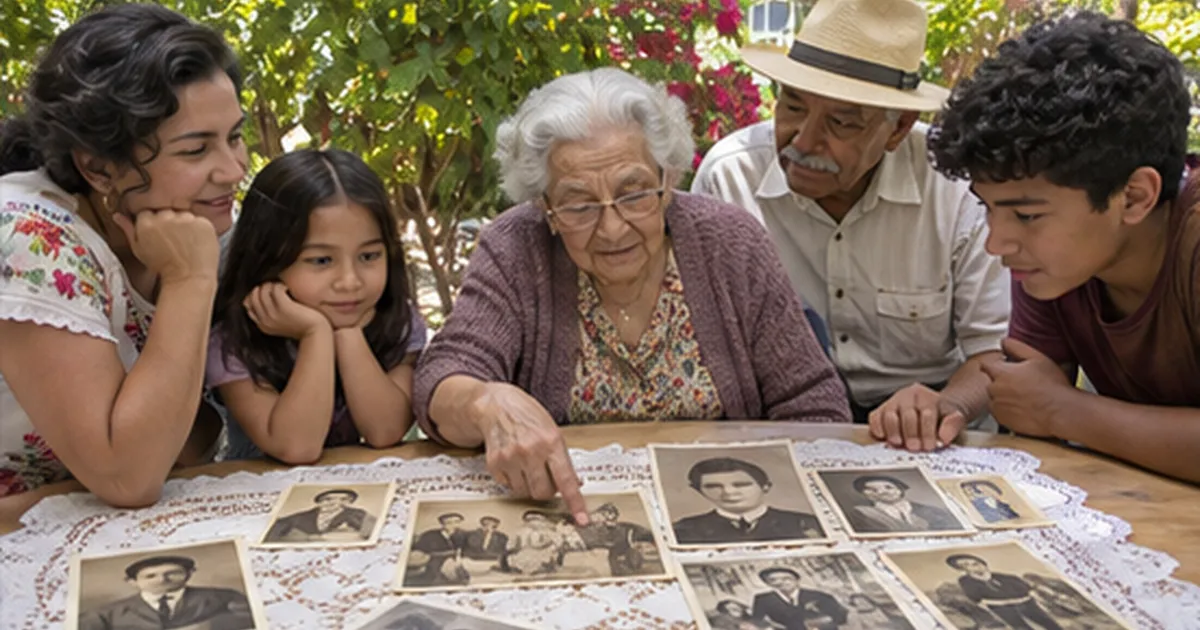
Imagine a university classroom where a professor asks students to list the seven stages of human life. One student says: infant, child, teen, young adult, middle age, elder, and wise elder. Another replies: prenatal, toddler, school-age, emerging adult, parent, retiree, and ancestor. A third argues that stages depend on culture—some societies recognize rites of passage like bar mitzvahs or quinceañeras as defining transitions, while others emphasize economic independence or marriage. The professor smiles and says, ‘None of these lists is wrong—but none is complete either.’ This moment captures the central puzzle: if we all grow older, why can’t we agree on how many stages there are—or what they’re called?
The idea of seven life stages is appealing—neat, balanced, memorable. But real lives don’t conform to such symmetry. Age bands, like ‘adolescence’ or ‘late adulthood,’ describe broad patterns seen across large groups, not rigid timelines or universal milestones. These categories are useful for organizing research or designing services, but they don’t dictate when a person should think, feel, or act a certain way. Development isn’t a checklist; it’s a dynamic process shaped by physical changes, social roles, and cognitive growth, each with its own timeline.
A Fictional Case: The Life of Mira Chen
Consider Mira Chen, a fictional 38-year-old software engineer living in Toronto. By age-based categories, she’s in ‘middle adulthood.’ But when we look closer, her life doesn’t fit neatly into any single stage. Born in Vancouver to immigrant parents, Mira started walking at 13 months, spoke in full sentences by age 2, and read fluently by 5—consistent with population averages for early development. At 16, she enrolled in a university bridge program, finishing her computer science degree by 20. Socially, she didn’t date until 24, later than many peers. At 30, she moved in with her partner; at 35, they adopted a child. Physically, Mira began experiencing mild joint pain at 37, earlier than typical for her age group, possibly due to years of sedentary work and genetic factors.
Now, let’s map Mira’s life using three different frameworks:
Biological Age Bands
- 0–2 years: Infancy. Mira met motor and language milestones early.
- 3–12 years: Childhood. She showed advanced problem-solving in math by age 8.
- 13–19 years: Adolescence. She experienced puberty at 12.5, slightly early.
- 20–39 years: Young to middle adulthood. Some signs of joint wear began at 37, earlier than average for this group.
- 40+ years: Approaching late adulthood. No data yet.
Social Role Transitions
- Age 5: Entered formal schooling.
- Age 20: Entered full-time workforce.
- Age 24: First romantic relationship.
- Age 30: Cohabitation.
- Age 35: Became a parent via adoption.
Cognitive Milestones (Fictional Assessments)
- Age 8: Scored at 95th percentile on a fictional abstract reasoning test, used here for illustrative purposes only.
- Age 14: Scored 125 on a fictional logic puzzle benchmark, part of an illustrative cognitive assessment.
- Age 25: Working memory capacity was recorded at 7.2 items in a fictional assessment (average estimate: 7.0).
- Age 35: Creativity index reached 88 in a fictional scale where the mean is 75.
- Age 38: Strategic decision-making showed a 12% improvement over her personal baseline in a fictional metric.
Each framework highlights a different observation about Mira. A record of physical activity, a timeline of family roles, and a sample of problem solving answer different questions. None of those records, taken alone, measures the rate at which her body or mind has aged. The exercise works because it keeps the comparisons separate.
What Can We Actually Establish?
From Mira’s case, we can observe that:
- Physical development includes both universal patterns (like puberty onset) and individual variation (like joint health).
- Social transitions are culturally influenced—adoption, for instance, may not be recognized as a life stage in all societies.
- Cognitive performance can improve or decline at different rates across domains—memory, creativity, decision-making—within the same person.
But we cannot conclude that Mira is ‘ahead’ or ‘behind’ in life. That judgment assumes a single correct path, which doesn’t exist. For example, her late romantic start isn’t a delay—it’s a different pattern. Her early academic success doesn’t predict later happiness or health. Each domain must be assessed separately, with evidence specific to that area.
Researchers sometimes choose an upper age boundary so that samples can be described consistently. The boundary is part of the study definition. It does not establish a day on which everyone completes the same biological or social transition. If another study chooses a different upper boundary, compare the definitions before treating the reported groups as equivalent.
An Alternative Interpretation: Stages as Choices, Not Phases
One plausible alternative is that life stages aren’t fixed sequences at all, but socially constructed choices. In this view, ‘adulthood’ isn’t a biological milestone but a bundle of permissions and responsibilities—voting, working, parenting—granted by society. A person might gain some adult rights at 18 but not others until later, depending on location and circumstance. Mira, for instance, was legally an adult at 18, but didn’t feel ‘grown up’ until 30, when she cohabited and stabilized her career.
Under this interpretation, development isn’t about passing through stages but accumulating roles. A person might be a student, employee, sibling, and caregiver all at once—roles that don’t follow a set order. This model better explains why people in the same age group can seem at ‘different stages’: they’re not behind or ahead; they’re just living different lives.
Consider two fictional 25-year-olds: one raises a child while working two jobs, and the other studies full time while living with relatives. They share a chronological age. Their responsibilities, constraints, and opportunities to practice particular skills differ. Their ages alone tell us little about either person's learning capacity or the quality of the support available to them.
Transfer to the Workplace
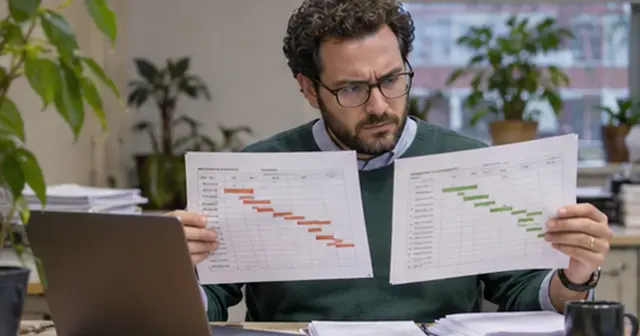
The limits of stage models become even clearer in workplace learning. Imagine a corporate training program based on the idea that ‘early career’ employees (ages 22–30) need technical skills, while ‘mid-career’ (31–50) need leadership training. This assumes age predicts readiness. But in a fictional team of 12 employees, 5 under age 30 already lead projects due to skill, not age. Two over 50 prefer technical roles and score higher on innovation metrics. In this fictional dataset, age explains only 18% of the variation in role preference (derived from an assumed correlation coefficient r = 0.42, so r² ≈ 0.18).
The company could identify the tasks each role demands, ask employees which tasks are unfamiliar, and observe a sample of current work. A 45-year-old moving into a new field may need the same equipment orientation as a 22-year-old entrant. Someone of either age might already know the equipment and benefit more from practice coordinating a team.
When HR uses stage theories to assign training, it risks misallocating resources. A rigid model might delay leadership development for young high-performers or push unwanted management roles onto skilled individual contributors. By contrast, a flexible, evidence-based approach—measuring actual performance, goals, and learning patterns—respects individual variation.
Why Seven Doesn’t Fit
The number seven has symbolic appeal—seven wonders, seven days, seven notes—but it has no biological or psychological basis for human development. Some theories propose three stages (young, middle, old), others five (infancy, childhood, adolescence, adulthood, elderhood), and still others over a dozen when including cultural rites. The variation isn’t noise; it’s evidence that no single count is correct.
Erikson’s framework describes eight psychosocial challenges over the lifespan. Its familiar questions about identity, belonging, and contribution can help a reader interpret a life story. The number eight belongs to that particular theory. A person may revisit an earlier concern, and a different theory can organize development around a different question.
Imagine two communities with different housing costs, caregiving arrangements, and opportunities for paid work. Young adults might form independent households at different ages even if their personal goals were similar. That is a hypothesis about how context could matter. Testing it would require real evidence about the communities and a clear definition of what counts as an independent household.
Patterns, Not Prescriptions
Age bands are useful for spotting trends—like rising rates of late parenthood or earlier onset of chronic conditions—but they shouldn’t be used to judge individual lives. A 40-year-old without children isn’t ‘behind’; a 25-year-old in a leadership role isn’t ‘exceptional’—they’re just living different patterns.
Instead of seeking a single list, we can use multiple frameworks side by side. A timeline might show biological aging, another social roles, another cognitive growth. Each is valid within its domain. But combining them into one sequence implies a unity that doesn’t exist.
Mira’s life teaches us that development is multidimensional. She was a precocious child, an early achiever, a late partner, an adoptive parent, and a lifelong learner. No seven stages can contain that. The real insight isn’t in counting phases but in recognizing that people grow in different ways, at different times, and that’s not a flaw—it’s the pattern.
For the wider context, read Roovet’s guide to developmental psychology across the lifespan or explore the developmental psychology course.