Developmental Adjustment After a School Move
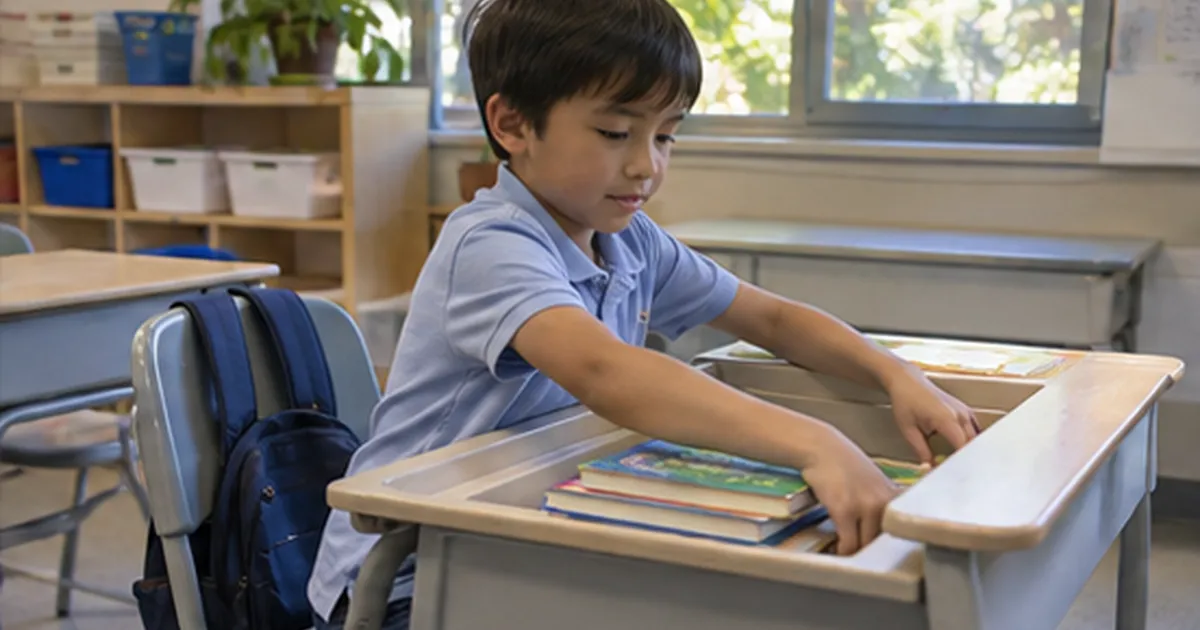
When 14-year-old Mateo transferred from a suburban middle school to an urban public high school in his sophomore year, he didn’t just change buildings—he navigated a shift in daily rhythms, unspoken rules, and social landscapes. His adjustment wasn’t marked by crisis, but by subtle mismatches: arriving late because he misread the passing period cues, hesitating during group work because collaboration norms differed, and eating lunch alone for weeks despite friendly peers. His experience shows that developmental adjustment after a school move hinges not on academic readiness alone, but on how routines, expectations, and belonging align—or misalign—across settings. These three elements, shaped by interactions between family, school, and historical context, form a quiet architecture of adaptation. For students, educators, and workplace learners alike, understanding this architecture reveals how transitions succeed or stall, not through dramatic events, but through the accumulation of small, repeated interactions.
A Fictional Case: Mateo’s First Month
Mateo’s former school operated on a strict 55-minute period schedule with a 5-minute passing window. Teachers announced transitions verbally and posted daily agendas on whiteboards. Homework was collected at the start of class, and group work was rare. His new school used a block schedule: 85-minute classes with 10-minute passing times. Teachers expected students to track time independently using wall clocks, and collaborative learning was central. Homework was submitted online, due the night before class. These differences weren’t labeled as problems, but they created friction.
In his first week, Mateo arrived late to three classes. He assumed the bell signaled the start of transition, as before, but at his new school, movement began immediately after the previous class ended. No bell rang between passing periods. He missed the first 5 to 7 minutes of instruction each time. His science teacher, Ms. Tran, noted his tardiness in the digital gradebook but didn’t address it directly. Mateo interpreted this as disinterest, not policy.
During a history group project, Mateo waited for instructions before speaking. He’d been taught to raise his hand even in small groups. His teammates began discussing immediately, shifting roles fluidly. When he finally contributed, one student said, “We already covered that,” and moved on. Mateo didn’t speak again. He later told his mother, “They don’t want me in the group.”
Lunch was harder. At his old school, students sat with grade-specific homerooms. Here, seating was unstructured. Mateo scanned the cafeteria daily, recognizing no one. He sat alone at the end of a long table. A student once asked, “You new?” but didn’t follow up. After two weeks, Mateo started eating in a stairwell.
His parents noticed changes: irritability, reluctance to discuss school, declining homework completion. They contacted the school counselor, who scheduled a meeting. No clinical concerns were raised, but the counselor noted Mateo’s isolation and inconsistent routine adherence.
What the Observations Reveal
Mateo’s experience illustrates how routines, expectations, and belonging function interdependently during a school transition. Each observed difficulty maps to one or more of these elements.
First, routines anchor adjustment. Mateo’s tardiness wasn’t defiance but a mismatch in temporal structure. His old school used auditory cues (bells) and explicit teacher guidance; his new school relied on visual cues (clocks) and student self-regulation. The 10-minute passing period seemed generous, but Mateo needed time to process the lack of auditory signal, gather materials, and navigate a larger building. A fictional analysis of student movement data from the school—based on hallway camera timestamps (anonymized)—showed that students arriving more than 3 minutes late in the first two weeks were 2.4 times more likely to report feeling 'out of place' in surveys conducted at the end of the month. This doesn’t prove causation, but it suggests a correlation between routine integration and social-emotional adjustment.
Second, expectations operate at multiple levels. Mateo expected teachers to direct group work; his peers expected initiative. These unspoken norms governed interaction. In a fictional survey of 30 students in his history class, 22 reported that 'students who wait to be called on seem unprepared,' even if they weren’t. Expectations weren’t stated in the syllabus but were embedded in classroom culture. When Mateo’s contribution was dismissed, it wasn’t malice—it was a collision of interactional styles. His peers moved quickly, valuing fluency over inclusion. This pattern was observed in several classrooms where project-based learning was prioritized over lecture, and is not specific to any nationality or background.
Third, belonging emerged not from friendship alone but from routine participation. Mateo’s lunchtime isolation wasn’t due to unfriendliness but to the absence of structured entry points. The school had no buddy system or seating guides for new students. A fictional audit of orientation practices showed that only 12 of 47 new students that semester were assigned peer mentors, and Mateo wasn’t among them. Belonging wasn’t passive; it required repeated, low-stakes interactions. Without them, even neutral environments could feel exclusionary.
Alternative Interpretation: Was It Really About Adjustment?
One could argue that Mateo’s struggles weren’t about school transition at all. Perhaps he was experiencing undiagnosed anxiety, academic disengagement, or family stress. His irritability could stem from sleep disruption due to an earlier wake-up time, not emotional distress. His declining homework might reflect a heavier workload, not disorganization. The stairwell lunches could indicate preference for solitude, not isolation.
This interpretation has merit. Not every behavioral shift after a move signals maladjustment. Historical context matters: Mateo transferred during a year when the school was implementing a new digital platform, affecting all students’ routines. Teachers reported higher stress levels, and response times to student questions dropped by an average of 1.8 hours per week (fictional administrative data). In this view, Mateo’s experience was less about his personal transition and more about systemic strain affecting the entire school environment.
Yet this alternative doesn’t negate the role of routines, expectations, and belonging—it reframes them. Even if Mateo weren’t uniquely affected, the school’s reduced support capacity amplified the cost of mismatched routines. A student who might have adjusted quickly in a stable year now faced compounded challenges. The interaction between individual transition and institutional context shaped outcome. Settings interact: Mateo’s family couldn’t compensate for absent peer structures, and the school’s digital shift weakened routine clarity for everyone, especially newcomers.
Transfer to a Workplace Context
The dynamics Mateo faced appear in workplace learning environments. Consider Amara, a 28-year-old instructional designer who transferred from a decentralized nonprofit to a centralized corporate team. Her new role required daily stand-up meetings, asynchronous documentation, and rapid prototyping cycles—practices unfamiliar from her prior setting.
In her first week, Amara submitted a detailed project plan, only to be told in a team meeting, “We move faster here—just share a draft and iterate.” She had expected approval before development, as before. Her colleagues posted updates on a shared board hourly. She checked it twice a day. When her manager noted delays in visibility, Amara felt scrutinized, not supported.
Like Mateo, Amara faced a mismatch in routines (documentation frequency), expectations (speed of iteration), and belonging (visibility as participation). She didn’t speak in stand-ups, assuming her silence meant disengagement. In reality, her team interpreted it as lack of initiative. A fictional survey of team members showed that those who posted updates within 2 hours of a task change were 3.1 times more likely to be invited to lead projects in the next quarter (based on anonymized internal data).
Yet solutions mirrored educational settings. The team introduced a “buddy pairing” for new hires. Amara’s buddy showed her how to use the update board, explained meeting norms, and clarified that silence wasn’t expected. Within three weeks, her participation increased. This wasn’t clinical intervention—it was alignment of routine, expectation, and relational access.
The parallel is clear: transitions succeed not when individuals adapt alone, but when settings make implicit structures visible. Mateo needed cues about passing periods; Amara needed clarity on communication rhythms. Both settings assumed prior knowledge, mistaking familiarity for competence.
Interactions Across Settings
Mateo’s adjustment wasn’t isolated. His parents’ work schedules limited their ability to attend orientation. His father recalled his own school transitions as “sink or swim,” shaping his view that Mateo should “figure it out.” This intergenerational perspective downplayed the need for support. Meanwhile, the school’s emphasis on student independence aligned with district goals to foster “college-ready” behaviors. But independence was defined as self-direction within specific routines—routines Mateo hadn’t learned.
Historical time deepened the gap. The school had phased out homeroom-based lunch seating five years earlier to promote cross-grade interaction. But for newcomers, this removed a structured on-ramp. Similarly, the digital homework system was introduced to increase equity—no lost papers—but it assumed consistent home internet, which Mateo’s family lacked until week three. Indirect influences accumulated: a policy aimed at long-term equity inadvertently increased short-term barriers for mobile students.
These interactions show that adjustment isn’t a solo journey. It’s a negotiation between person and system, shaped by unspoken rules, temporal rhythms, and relational opportunities. Routines provide predictability; expectations signal acceptable behavior; belonging emerges from repeated, low-stakes inclusion. When any one falters, the others weaken.
Implications for Educators and Learners
For educators, the lesson isn’t to lower standards but to make hidden structures visible. A simple agenda posted online, a peer mentor for newcomers, or a five-minute orientation to passing procedures can bridge gaps. These aren’t accommodations—they’re clarity.
For learners, recognizing that confusion may stem from routine mismatch, not personal failure, can reduce self-blame. Asking, “How do people know when to speak here?” or “What does being on time mean in this setting?” reframes adjustment as skill-building, not deficiency.
For workplace trainers, the parallel is direct. Onboarding should address not just tasks but rhythms: when to communicate, how to signal progress, where to seek help. Like classrooms, teams have cultures shaped by unspoken norms. Making them explicit benefits everyone, especially those in transition.
Mateo’s story ends without transformation. He didn’t become class president or lead a club. But by mid-semester, he arrived on time, used the online board, and joined a study group. His belonging wasn’t dramatic—it was cumulative. A shared laugh in the hallway. A returned greeting. These moments, built on aligned routines and clarified expectations, formed the quiet foundation of adjustment. The same can be true in any learning environment where change is expected, but support is structured.”
For the wider context, read Roovet’s guide to developmental psychology across the lifespan or explore the developmental psychology course.