How Friendships Change During the Move to Middle School
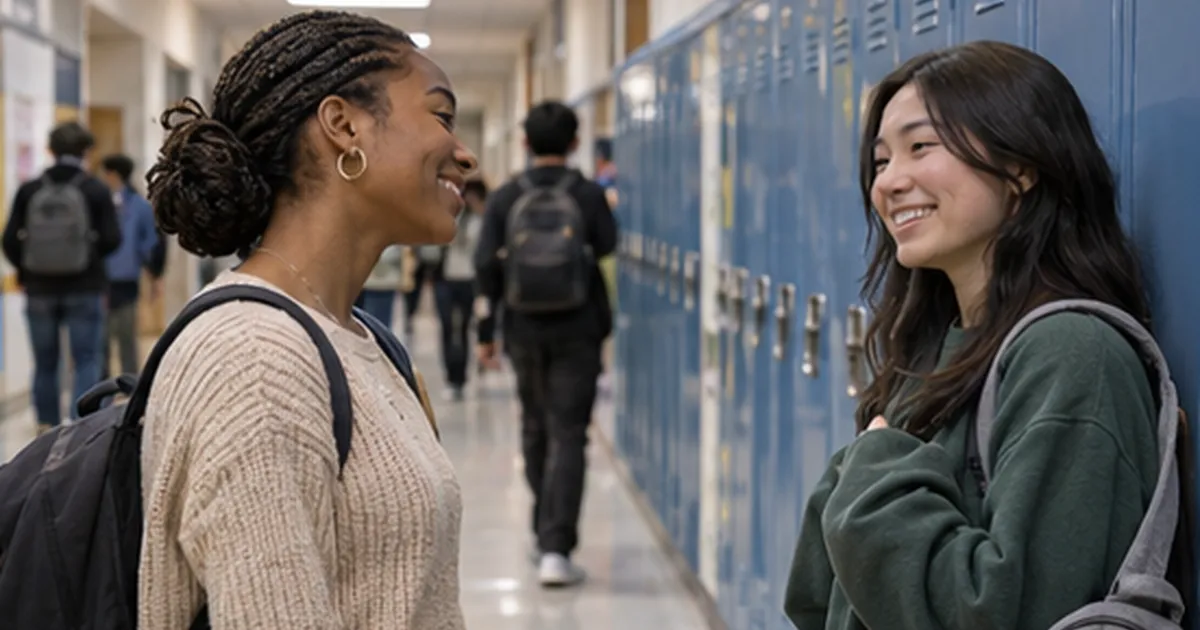
When Maya stepped into the bustling hallway of Lincoln Middle School on her first day, she clutched her schedule tightly, scanning the sea of unfamiliar faces. Just one summer ago, she and her three closest friends from elementary school had promised to stick together. Yet by the third week, only one of them—Lena—still shared a class with her. The others had drifted into different academic tracks and lunch groups. Maya’s experience isn’t rare. Friendships often shift dramatically during the transition to middle school, not because feelings change, but because the structure of daily life does. The very design of classrooms, the proximity of lockers, and the patterns of who sees whom each day reshape relationships in predictable yet deeply personal ways.
Check the timetable before interpreting a friendship
Take two fictional classmates who used to share lunch five days a week. At middle school they meet at lunch only on Wednesday. Counting conversations per week could suggest that the relationship has weakened, even if the friends still talk whenever both are present. Compare opportunities as well as interactions. Do they seek each other out on Wednesday? Does either initiate contact outside lunch? A timetable can explain part of the change without telling us everything about the friendship.
Mapping a Changing Social World
Consider a fictional cohort of 30 sixth-grade students at Lincoln Middle School. In their final year of elementary school, they attended the same homeroom and moved together between classes. Friendships formed easily through repetition and closeness. A simple network map from that year would show dense clusters: Maya, Lena, Sam, and Jada formed one tight group, with strong reciprocal ties—each named the others as best friends. They sat together at lunch, played at recess, and walked home in a group.
But when these students entered Lincoln, they were sorted into four separate advisory groups and assigned different class schedules based on math and reading placements. The new structure introduced variation in exposure. Only 12 students shared at least three core classes with someone from their old group. Maya ended up in a different math and science track than Sam and Jada. Lena, though in the same advisory, had a different lunch period.
By mapping the number of shared classes, we can estimate potential interaction. In the fictional dataset, students who shared two or more classes were 3.2 times more likely to list each other as close friends after six weeks than those who shared none. This illustrates a principle sometimes called structural proximity: overlapping routines increase opportunities for interaction and connection, which can support friendship formation.
But structure alone doesn’t explain everything. Lena and Maya shared only one class but remained close. Why? They lived two blocks apart, so they walked to school together every morning. Proximity outside school—what researchers sometimes call spatial accessibility—acted as a stabilizing force. In contrast, Sam and Jada, though in the same academic track, lived on opposite sides of town. Without shared after-school routines or neighborhood ties, their friendship weakened despite classroom overlap.
The Role of Reciprocity in Shifting Ties
Reciprocity—the mutual exchange of attention, messages, or invitations—shapes whether a connection survives structural change. In the fictional group, a survey administered in October asked students to name up to five peers they spent free time with or talked to most during the school day. Only 45% of friendship nominations were reciprocal. For example, Maya listed Lena, but Lena did not list Maya. This asymmetry often indicated a friendship in flux.
Over time, reciprocal ties proved more resilient. Among pairs who mutually named each other in both September and October, 88% still reported closeness by December. In contrast, one-sided nominations dropped to 31% sustained connection over the same period. This suggests that even when structure supports contact, emotional reciprocity determines whether bonds endure.
Yet reciprocity isn’t always a sign of strength. In one fictional case, two students—Diego and Amir—mutually listed each other but rarely interacted in person. They exchanged frequent texts about video games but avoided in-person conversation. Their reciprocity existed in a different setting: online, after school. This highlights a key insight: reciprocity must be examined within context. A tie that thrives in digital space may appear weak in classroom observations, and vice versa.
How Settings Interact Over Time
The transition to middle school doesn’t happen in isolation. It unfolds within broader patterns of family life, neighborhood routines, and historical shifts in how children spend time. In the fictional Lincoln cohort, family decisions shaped access to shared settings. For example, three students joined a competitive soccer league that met four evenings a week. Two others started attending religious education classes after school. These out-of-school commitments reduced time available for casual peer interaction, indirectly influencing who could maintain friendships.
Historical context also plays a role. In this fictional scenario, Lincoln Middle School introduced a new policy limiting hallway movement between classes to reduce noise. As a result, brief encounters—once a source of connection—diminished. Students had fewer chances to say hello or make plans. Over one semester, the average number of unique peers a student interacted with during passing periods dropped from 8.2 to 3.1 in the fictional data. This structural constraint reduced opportunities for weak ties to form or strengthen.
Family-school relationships also mattered. Parents who attended orientation events or volunteered were more likely to learn about after-school clubs. Their children, in turn, joined more group activities. In the fictional dataset, students with at least one parent who attended a school event were 1.7 times more likely to report having made three or more new friends by November. This does not mean parent involvement caused friendship growth, but it was associated with conditions—such as information access and familiarity with the school—that could facilitate joining activities.
Alternative Interpretations: Is It Really About Structure?
One might argue that the changes in friendship patterns aren’t due to structure or proximity at all, but to developmental shifts. Perhaps sixth graders naturally become more selective, seeking friends who match their evolving interests or identities. This is plausible. In the fictional group, some students did begin to prioritize shared hobbies—such as drawing or basketball—over past ties.
However, even these interest-based choices were shaped by structure. For instance, only two elective options were offered: art and robotics. Students interested in music had no class to join and instead formed an informal group during lunch. Their friendship network emerged not in classrooms but in the cafeteria, constrained by the school’s limited programming. Thus, even identity-driven connections depend on available settings.
Another alternative explanation is that changes reflect personality. Shy students might struggle more with transition. In the fictional data, self-reported shyness correlated with lower peer nomination counts. However, shyness did not predict isolation uniformly. Students who shared classes with at least one familiar peer maintained higher nomination counts, even if they reported being shy. This suggests that structural support, such as a shared class with a former friend, can help mitigate social challenges, regardless of temperament.
Transfer to Another Context: Workplace Learning Groups
The same principles apply beyond schools. Consider a fictional professional development cohort of 24 employees at a regional health services organization. These workers were grouped into rotating teams for a six-week training on new software. Initially, friendships formed quickly among those seated at the same table during morning sessions. By week two, informal lunch groups had emerged, mirroring seating arrangements.
When the program shifted to virtual meetings, participation dropped. Employees with cameras on interacted more; those without were less likely to speak. The new structure—online, with optional visibility—reduced proximity. Reciprocity suffered: messages sent to teammates went unanswered more often. By week five, only 40% of original peer pairs still communicated regularly.
But one subgroup remained tightly connected: four employees who lived in the same neighborhood and continued to meet for coffee before sessions. Their off-site proximity sustained interaction, much like Maya and Lena’s shared walk to school. This reinforces the idea that relationships depend not just on formal design, but on the interplay of multiple settings—work, neighborhood, digital space—over time.
Moreover, indirect influences mattered. Employees whose managers encouraged team check-ins reported stronger peer ties. This mirrors the role of family in the school example: support from a higher-level system (management, parents) can amplify opportunities for connection. The health organization didn’t mandate peer meetings, but encouragement from supervisors acted as a subtle enabler—just as parent attendance at school events did.
The lesson is transferable: when people move into new environments, their relationships don’t change solely because of personal choice or emotional drift. They change because the architecture of daily life shifts—what classes are shared, where people live, how communication is structured. Recognizing this helps educators, parents, and managers design settings that support continuity and inclusion. It also helps individuals understand that drifting apart isn’t always about liking someone less—it might just be about seeing them less.
For the wider context, read Roovet’s guide to developmental psychology across the lifespan or explore the developmental psychology course.


