Experience-Expectant and Experience-Dependent Development
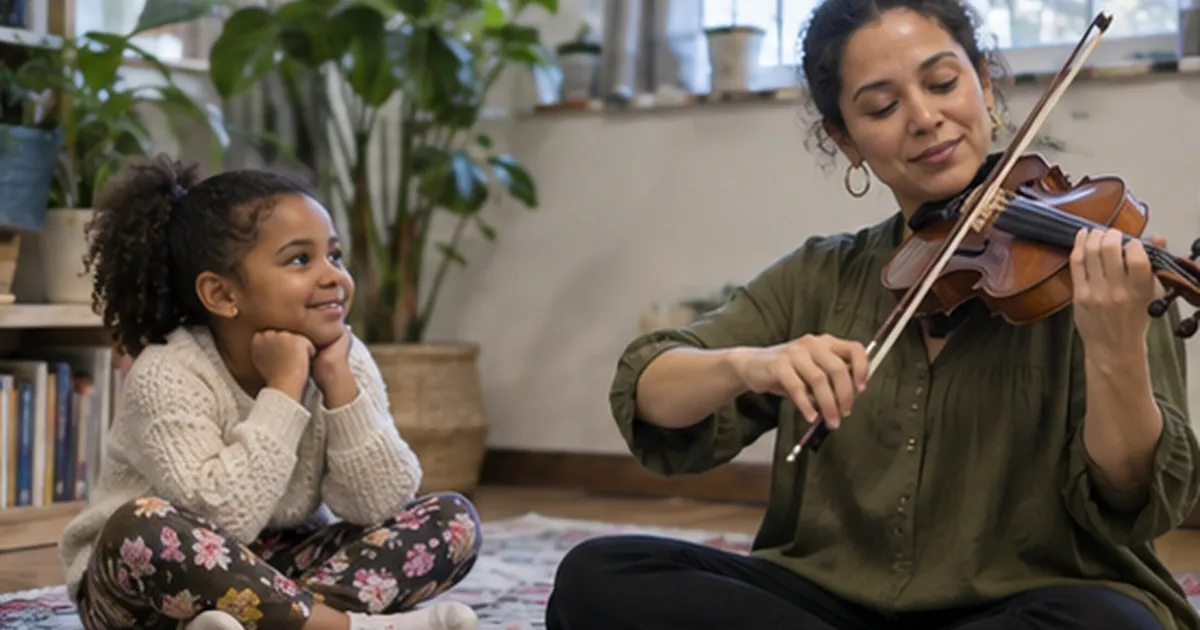
Experience-expectant and experience-dependent development describe two ways experience contributes to the organization of the nervous system. The first concerns kinds of input that members of a species ordinarily encounter, such as patterned light reaching the eyes. The second concerns learning from an individual’s particular history, such as recognizing the sound of a familiar violin or learning to play a phrase in tune. The distinction is about the kind of input and the process under discussion. A birthday, an early start, or a high score cannot classify a process by itself.
What does “expectant” mean?
Think about the difference between seeing patterned input and seeing one particular picture. Most people who can see encounter borders, movement, contrasts, and changing arrangements of light in ordinary surroundings. A particular photograph of a red bicycle leaning against a wall is much less predictable. Another person can grow up without ever seeing that photograph. The distinction helps explain why researchers ask different questions about these experiences.
In the phrase “experience-expectant,” expectation is a shorthand for a feature of development. It does not mean that an infant consciously anticipates something, or that a parent must supply a prescribed lesson. The question concerns how a developing system uses input that was ordinarily available across the history of a species. An individual’s environment supplies actual examples of that input. The system does not need a particular photograph, a particular toy, or a particular musical curriculum to encounter patterns.
Now imagine asking whether a viewer remembers the bicycle photograph a day later. The identities of the objects, their arrangement, and the viewer’s memory of the occasion belong to a different question. That particular memory depends on what this person encountered. A person who studied a photograph of a kitchen instead could learn something equally specific about a completely different scene.
What does “dependent” add?
Both terms involve experience, so the word “dependent” can sound redundant at first. Its distinguishing feature here is the individuality of the information. Learning the route from your door to a friend’s house depends on the streets you walked. Learning someone’s voice depends on hearing that speaker. Learning a violin fingering depends on which finger movement produces which note on that instrument. Someone else can acquire a different route, voice memory, or fingering through a different history.
Experience-dependent learning can take place early or late in life. A young child recognizes a favorite song through a personal history of hearing it. An adult learns a second arrangement of the same song through practice. Neither example tells us exactly what changed in a particular brain. They identify the learning problem: the person has acquired information that could have been different had the encounters been different.
A violin lesson contains several questions
Imagine an instructor working with two fictional students, Asha and Ben. Both can hear the instructor demonstrate a short phrase. Asha has played that phrase for a month. Ben is hearing it for the first time. When the instructor pauses before the final note, Asha hums what comes next. Ben offers a different note that also sounds plausible. What does the difference in their answers show?
The simplest interpretation is that Asha knows this arrangement. She might recognize the phrase from lessons, from a recording played at home, or from another piece that shares the same ending. Ben’s answer might reflect a different musical history. Their responses give the instructor a starting point for a question about familiarity. They do not measure a general difference in hearing, reveal a developmental deadline, or identify a particular neural circuit.
The same lesson depends on sensory capacities that have a much broader developmental history. Hearing sounds and discriminating particular familiar phrases are related achievements, but they are different objects of study. An investigator interested in the development of sensory processing would ask about the kinds of input a system receives and when it receives them. An instructor interested in the phrase can ask which examples each student practiced. The instructor does not need to infer one student's neural history to plan the next rehearsal.
Change the comparison before changing the explanation
Asha plays the familiar ending accurately three times. Ben improves after two demonstrations. An observer announces that Asha must have begun music at a younger age. That is one possible fact about her biography, but nothing in the observation establishes it. She might have started lessons later and spent more time on this particular piece. She might also recognize the ending from a different instrument. The explanation goes beyond the comparison.
The instructor can learn more by playing a new phrase to both students, checking what each heard, and giving them similar opportunities to practice. Suppose Asha’s initial advantage is smaller on the new phrase. That would strengthen the case that familiarity contributed to the original difference. It would still leave open differences in practice strategy, attention, fatigue, or familiarity with the style. A better comparison narrows the possibilities without making the evidence carry more weight than it can support.
Consider a second change. Ben can hum the phrase after one demonstration but cannot place his fingers quickly enough to play it. Asha can play the notes while looking at the music but loses her place when the page is covered. A single overall score would hide that difference. Listening, remembering the sequence, reading notation, and moving the fingers make different demands. Asking which part changed makes the explanation more precise than labeling one student an early or late learner.
Where sensitive periods fit
A sensitive period is a span during which particular input has an especially strong influence on a particular process. Using that concept well requires naming the process and the input. A claim about the development of a sensory system cannot simply be carried over to the question of when a person should start violin lessons. Learning an instrument draws on multiple capacities and involves culturally specific choices about tuning, notation, style, and practice.
The phrase “experience-expectant” can tempt a reader to imagine a checklist of childhood enrichment activities. A violin concerto, a set of flash cards, and an architectural drawing are all examples of particular cultural materials. Calling them “patterned” does not make the brain expect those specific materials in a technical developmental sense. Many inputs have patterns. The relevant question is how widely shared the expected kind of experience is and what evidence links it to the development of a particular system.
Try the distinction with a different sense
Picture a learner entering a kitchen with the lights on. The learner sees an array of shapes and edges. After several days of helping there, the learner can find the measuring spoon in a crowded drawer. These descriptions operate at different levels. The first involves visual input of a widespread kind. The second involves memory for a specific kitchen, the placement of a particular tool, and what the learner has done there before.
Move the spoon overnight and the learner may first reach toward the old position. That mistake provides evidence about a learned expectation concerning this drawer. It does not establish that the visual system needs to develop further. Conversely, knowing how this learner uses a familiar drawer would tell an investigator little about the developmental effects of patterned light. A good explanation matches the scale of its evidence to the scale of its claim.
A quick test for reading a developmental claim
When you encounter either term in a textbook, write down three things: the input, the behavior or process being explained, and the comparison that supports the explanation. If the input is “music,” specify whether the writer means ordinary exposure to sound, repeated exposure to one melody, or deliberate practice of an instrument. If the outcome is “better performance,” specify what a person actually did. Then ask whether the comparison separates familiarity from timing and opportunity.
Return to Asha and Ben with those questions in mind. Their instructor has enough evidence to choose a useful next lesson: give Ben a chance to learn the ending and give Asha an unfamiliar variation. The instructor does not have enough evidence to assign either learner a neural advantage or a fixed limit. That boundary is part of the value of the distinction. It helps a reader explain the experience that actually occurred while keeping broader claims tied to the evidence they require.
For the wider context, read Roovet’s guide to developmental psychology across the lifespan or explore the developmental psychology course.
Further reading: Review of experience and plasticity.


