Online High School for Athletes: Plan Around Practice and Travel
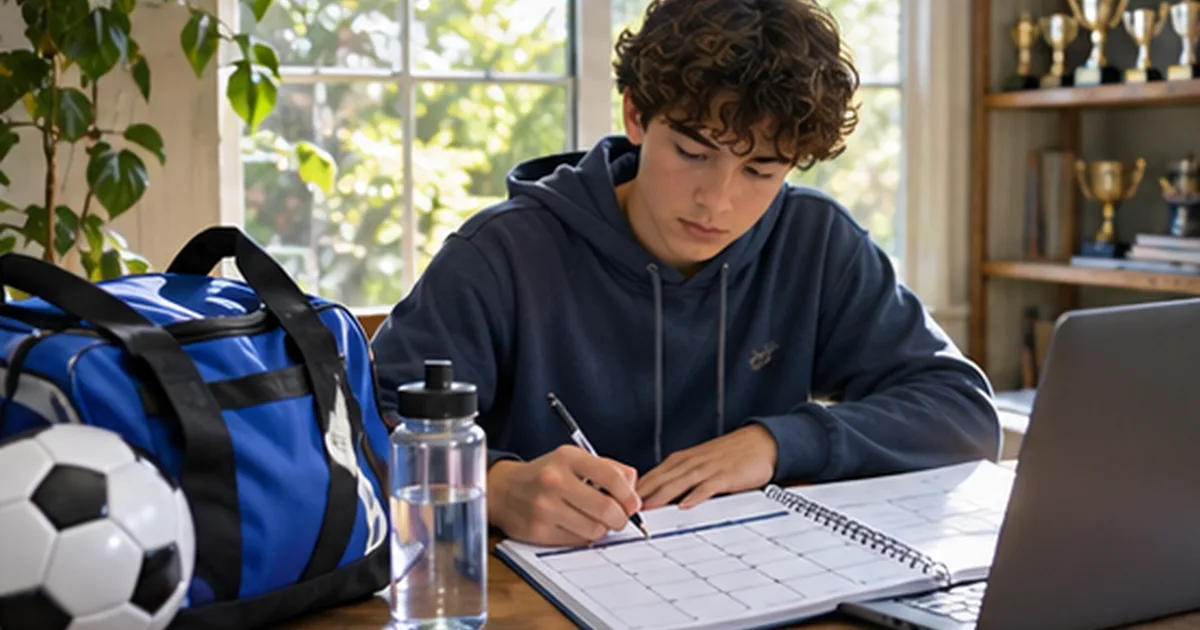
For student athletes balancing intense training, competitions, and academic requirements, traditional school schedules often create unavoidable conflicts. Online high school offers a practical alternative that allows learners to maintain academic momentum without compromising athletic development. Roovet Academy provides structured, self-paced learning options designed for families seeking flexibility—ideal for students whose commitments extend beyond the classroom. Explore how families can adapt academic planning to support athletic goals, using real-world scenarios and actionable strategies.
Why Athletes Need Flexible Scheduling
Young athletes often face packed weekly routines. Consider Maya Tran, a 16-year-old competitive swimmer training 20 hours per week and traveling monthly for regional meets. Her local high school requires attendance from 8 a.m. to 3 p.m., making it difficult to attend morning practices or return from weekend tournaments without missing critical instruction.
Traditional schools may offer independent study or excused absences, but these are often temporary fixes. Missed classes accumulate, and catching up becomes a recurring challenge. Online high school platforms address this by allowing students to complete coursework when and where it fits—whether that’s between swim sets, on a travel day, or during downtime at a meet.
The key advantage isn’t just convenience. It’s consistency. With a flexible schedule, students like Maya can maintain steady academic progress without relying on make-up work or last-minute cramming.
Planning Around a Tournament Calendar
Take the case of Jordan Lee, a 15-year-old volleyball player on a national club team. Jordan’s season includes monthly travel to cities like Denver, Atlanta, and Chicago for tournaments. A typical trip spans Friday through Sunday, with games starting as early as 7 a.m. local time.
Using an online high school program, Jordan’s family plans academic blocks around the travel schedule. For example:
- Pre-tournament week: Complete all quizzes and discussion posts by Wednesday.
- Travel days: Watch recorded lectures on the plane or during hotel downtime using a tablet.
- Post-tournament: Submit essays and projects by Tuesday evening, using Monday as a recovery and review day.
This rhythm prevents academic backlogs. Jordan logs in daily, even if only for 20 minutes, ensuring continuity. Teachers in online programs typically allow assignment windows—say, a quiz open from Friday to Monday—giving students flexibility within structure.
Course Load Management for Peak Seasons
Athletic seasons vary in intensity. During peak months, reducing academic load can prevent burnout. This doesn’t mean lowering standards—it means adjusting pacing.
For instance, during track season, 17-year-old Diego Mendez shifts from five courses to four. He drops a non-core elective (e.g., Art History) and focuses on required subjects: Algebra II, U.S. History, English, and Biology. This adjustment is coordinated with his academic advisor through Roovet Academy, ensuring he stays on track for graduation without overextending.
When the season ends, Diego resumes a full course load. This seasonal modulation mirrors how professional athletes manage training cycles—periodization applied to academics.
Consider the time math:
- Full course load: 5 courses × 5 hours/week = 25 hours
- Reduced load: 4 courses × 5 hours/week = 20 hours
- Savings: 5 hours/week
That reclaimed time can go toward recovery, nutrition, or extra practice. For athletes training 15+ hours weekly, even five hours makes a meaningful difference.
Using Travel Time Effectively
Long drives or flights don’t have to be academic dead zones. With mobile access, students can turn transit into productive time.
For example, 14-year-old soccer player Aisha Patel travels an average of 3.5 hours each way to weekend matches. She uses this time to:
- Review flashcards for Spanish vocabulary
- Listen to history podcast lectures
- Outline upcoming essays on her phone
She completes about 30–40% of her weekly academic tasks during travel. This strategy reduces evening workload, allowing time for rest and family.
Parents can support this by ensuring devices are charged, downloaded content is available offline, and a quiet workspace is ready at home for deeper focus.
Academic Consistency and Mental Resilience
Consistent academic engagement supports mental resilience—an often-overlooked component of athletic performance. Studies in educational psychology suggest that maintaining routine in one area of life can buffer stress in others. For athletes, juggling competitions and grades can be overwhelming, but predictable academic rhythms provide stability.
Consider Marcus Reed, a 16-year-old gymnast preparing for national qualifiers. His weekly routine includes:
- Morning training: 5:30–8:00 a.m.
- Online classes: 9:00 a.m.–12:00 p.m.
- Strength conditioning: 2:00–4:00 p.m.
- Evening review: 7:00–7:30 p.m. (check messages, preview next day)
This structure creates predictability. Even when travel disrupts the norm, Marcus maintains a 30-minute evening review to stay oriented. He uses a digital planner shared with his parents and academic mentor, ensuring alignment across responsibilities.
Such routines don’t eliminate stress, but they reduce decision fatigue. Knowing when to study removes one variable from an otherwise demanding schedule.
Coordinating with Coaches and Educators
Success depends on communication. Families should proactively share academic calendars with coaches and athletic directors. Conversely, academic advisors should be informed of upcoming tournaments.
For example, when 15-year-old tennis player Chloe Kim had a USTA ranking event overlapping with a biology midterm, her family notified her online instructor two weeks in advance. The instructor adjusted the exam window from a single day to a three-day period, allowing Chloe to take the test after returning home.
This kind of coordination is easier in online programs, where instructors often expect non-traditional schedules. It’s not about special treatment—it’s about designing systems that accommodate real-life demands.
Graduation Requirements and Credit Tracking
Families must ensure that coursework fulfills state graduation requirements. Online high school programs vary in scope and recognition. It’s the family’s responsibility to verify that credits earned are accepted by their state or intended diploma-granting institution.
For instance, some states require specific courses in government or physical education. Students like Maya Tran must confirm that her online PE course—completed through activity logs and weekly reflections—meets her home state’s criteria.
Roovet Academy offers a range of courses that families can integrate into a broader academic plan. For more details on available subjects and learning formats, visit Roovet's course offerings.
Preparing for Post-Secondary Pathways
Student athletes often aim for college recruitment. While online high school doesn’t guarantee eligibility, it can support the academic side of athletic recruitment.
If athletic recruitment is part of the plan, make a separate appointment to check the academic record. Bring the exact course title, provider, dates, and grading arrangement. Ask which organization makes the eligibility decision and where its current criteria are published. A coach can help explain a practice schedule while an adviser helps the family identify the person who can evaluate course documentation.
Consider a fictional runner who has two possible schedules for spring. One puts a lab on the afternoon before every away meet. The other moves the lab to Monday and leaves room to prepare the report before departure. Both schedules carry the same course title. The Monday option produces a more reliable record of completed work because the student can attend, revise, and ask questions before leaving town.
Keep planning notes separate from official decisions. A written reply about a particular course is easier to revisit than a family member’s recollection of a conversation. If the program or destination changes, ask whether the earlier decision still applies.
Support Systems for Remote Learners
Isolation is a risk in any remote learning model. Athletes already spend significant time away from peers, so academic solitude can compound loneliness.
To counter this, families can:
- Encourage participation in virtual study groups
- Schedule weekly check-ins with academic mentors
- Use discussion boards to engage with classmates
- Pair online learning with local extracurriculars, like community theater or volunteer work
For Aisha Patel, joining a virtual book club through her online school improved her engagement with English coursework. She later cited the discussions as helpful in writing analytical essays.
When Homeschooling Makes Sense
Some families opt for full homeschooling to maximize flexibility. This approach allows complete control over pacing, curriculum, and scheduling.
Jordan Lee’s family transitioned to homeschooling through Roovet's homeschool resources, combining structured coursework with independent projects. In science, Jordan completed a unit on biomechanics, linking physics concepts to volleyball techniques—a personalized project not feasible in a standard classroom.
Homeschooling requires more parental involvement but offers unmatched adaptability for high-travel athletes.
Making the Transition Smoothly
Switching to online high school mid-year requires planning. Key steps include:
- Transferring existing credits: Request official transcripts from the current school.
- Reviewing course equivalencies: Ensure online classes meet required standards.
- Setting up a dedicated learning space at home: Minimize distractions.
- Establishing a daily rhythm: Blend academics with training.
Families should also assess technology needs—reliable internet, a quiet workspace, and compatible devices. For athletes like Marcus Reed, using a second monitor helped when reviewing video lectures while taking notes.
Starting with a trial week can reveal potential challenges. Chloe Kim’s family tested the schedule during a non-competitive week, adjusting wake times and break intervals before committing fully.
Long-Term Academic Planning
Flexibility shouldn’t mean aimlessness. Successful student athletes set academic milestones just as they do athletic ones.
Diego Mendez set a goal to complete Algebra II by spring break, aligning it with his indoor track season end. Meeting that target gave him momentum heading into outdoor season.
Using a shared calendar, families can visualize both academic and athletic timelines, identifying high-pressure weeks and scheduling lighter academic loads accordingly.
Ultimately, online high school isn’t a shortcut—it’s a different path. It demands self-discipline, time management, and family support. But for young athletes committed to excellence in both arenas, it offers a way to pursue both passions without sacrifice.
Explore Roovet Academy’s homeschool program.