Role Transitions in Midlife: Learning in a Familiar Family
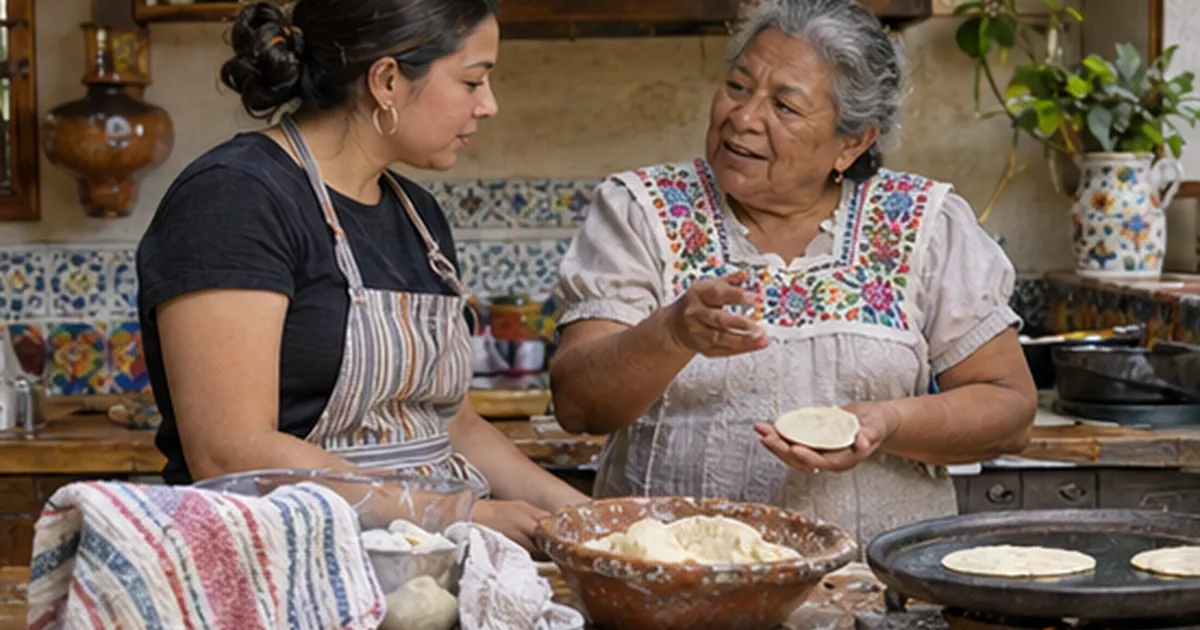
An adult who has cooked beside a parent for years may suddenly find themselves organizing the meal, teaching a younger relative, and asking that same parent for advice. Midlife role change can happen inside an activity that feels completely familiar. Notice who takes responsibility, whose knowledge matters, and how the family negotiates the next decision.
Who leads when the family cooks together?
Picture an adult preparing a family recipe with an older relative. This time the adult organizes the shopping and timing, while the relative explains how to recognize the right texture by touch. Responsibility has shifted in one part of the activity and expertise remains with the relative in another. On a later occasion the roles could shift again. Recording who plans, who teaches, and who asks for help captures the exchange more accurately than describing one person simply as the helper and the other as the recipient.
Introduction to Midlife Role Transitions
Midlife, typically defined as the period between the ages of 40 and 65, is a time of significant change and transformation. During this stage, individuals may experience a range of role transitions, including changes in their career, family, and social relationships. For example, a person may transition from being a full-time parent to an empty nester, or from being a primary breadwinner to a retiree. These transitions can be both exciting and challenging, as individuals must adapt to new roles and responsibilities while also maintaining their sense of identity and purpose.
A Worked Example: The Case of Sarah and Her Family
Let's consider the illustrative case of Sarah, a 50-year-old mother of two adult children. Sarah's husband, John, has recently retired, and their children have left the family home to pursue their own careers. As a result, Sarah is experiencing a significant role transition, as she must adapt to a new family dynamic and find ways to occupy her time and energy. In the past, Sarah's role as a mother and wife was central to her sense of identity and purpose. However, with her children gone and her husband retired, Sarah must negotiate new roles and responsibilities within her family. For instance, she may need to take on more household responsibilities, or find new hobbies and interests to pursue with her husband. This example is fictional and intended to illustrate common themes in midlife role transitions.
In this example, we can see how midlife role negotiation involves a process of learning and reciprocity. Sarah must learn to navigate her new roles and responsibilities, while also being open to feedback and support from her family members. At the same time, her family members must be willing to adapt to Sarah's changing needs and priorities. By working together and communicating effectively, Sarah and her family can avoid crisis and cultivate a more fulfilling life.
Learning and Reciprocity in Midlife Role Transitions
Learning and reciprocity are essential components of midlife role negotiation. As individuals navigate new roles and responsibilities, they must be open to learning and growth, while also being willing to provide support and guidance to others. This process of mutual learning and support can help individuals avoid feelings of isolation and disconnection, and instead cultivate a sense of community and belonging. For example, Sarah may learn new skills or hobbies to pursue with her husband, while also providing emotional support and guidance to her adult children as they navigate their own careers and relationships.
In addition to learning and reciprocity, midlife role negotiation also involves a process of give-and-take. As individuals adapt to new roles and responsibilities, they must be willing to compromise and find common ground with others. This can involve negotiating new household responsibilities, or finding ways to balance individual needs and priorities with the needs and priorities of others. By being open to compromise and negotiation, individuals can avoid conflict and cultivate a more harmonious and supportive family environment.
A Contrasting Case: The Importance of Historical Time and Indirect Influences
While Sarah's case illustrates potential aspects of midlife role negotiation, it is also important to consider the role of historical time and indirect influences. For example, someone raised in a traditional or authoritarian family may approach role changes differently than someone from a more egalitarian background. Similarly, individuals who have experienced significant life events such as loss or trauma may navigate transitions with distinct emotional and practical needs. To illustrate this variation, consider the fictional case of Maria, a 55-year-old woman who grew up in a traditional family and has recently experienced the loss of her spouse. Maria's experience of midlife role negotiation may be shaped by cultural expectations, family history, and personal grief. This example is hypothetical and intended for illustrative purposes.
In Maria's case, the process of midlife role negotiation may involve a greater emphasis on family and community, as well as a stronger sense of tradition and cultural heritage. At the same time, Maria's experience of loss and grief may also play a significant role in shaping her priorities and expectations. By considering the intersection of historical time, indirect influences, and individual circumstances, we can gain a more nuanced understanding of midlife role negotiation and the ways in which it can be supported and facilitated.
Avoiding the Crisis Trope: A Focus on Settings and Relations
While midlife role negotiation can be a challenging and complex process, it is also important to avoid the crisis trope and instead focus on the ways in which settings and relations can support and facilitate positive change. Rather than viewing midlife as a time of crisis or decline, we can see it as a period of opportunity and growth, in which individuals can cultivate new skills and relationships, and pursue new interests and passions.
By focusing on settings and relations, we can also recognize the importance of context and environment in shaping midlife role negotiation. For example, an individual who lives in a supportive and connected community may have an easier time navigating midlife role transitions, while an individual who is isolated or disconnected may face greater challenges. Similarly, an individual who has access to resources and support, such as counseling or education, may be better equipped to navigate the challenges of midlife role negotiation.
In conclusion, midlife role negotiation is a complex and multifaceted process that involves learning, reciprocity, and a willingness to adapt to changing roles and responsibilities. By avoiding the crisis trope and instead focusing on settings and relations, we can gain a more nuanced understanding of this process and the ways in which it can be supported and facilitated. Whether through the example of Sarah and her family, or the contrasting case of Maria, we can see the importance of considering historical time, indirect influences, and individual circumstances in shaping midlife role negotiation.
- Midlife role negotiation involves a process of learning and reciprocity, in which individuals must adapt to new roles and responsibilities while also being open to feedback and support from others.
- Historical time and indirect influences, such as cultural background and family history, can play a significant role in shaping midlife role negotiation.
- Settings and relations, such as community and environment, can also support and facilitate positive change during midlife role negotiation.
- Avoiding the crisis trope and instead focusing on opportunity and growth can help individuals navigate midlife role transitions with greater ease and confidence.
-
Key Takeaways:
- Midlife role negotiation is a complex and multifaceted process that involves learning, reciprocity, and adaptation.
- Individuals must be open to feedback and support from others, while also being willing to provide support and guidance in return.
- Historical time, indirect influences, and individual circumstances can all shape midlife role negotiation, and must be considered in order to provide effective support and facilitation.
- By focusing on settings and relations, and avoiding the crisis trope, we can gain a more nuanced understanding of midlife role negotiation and the ways in which it can be supported and facilitated.
Ultimately, midlife role negotiation is a process that requires patience, understanding, and a willingness to adapt to changing roles and responsibilities. By recognizing the importance of learning, reciprocity, and settings, and by avoiding the crisis trope, we can help individuals navigate this process with greater ease and confidence, and cultivate a more fulfilling and meaningful life.
In conclusion, midlife role negotiation is a complex and multifaceted process that involves learning, reciprocity, and adaptation. By considering the intersection of historical time, indirect influences, and individual circumstances, we can gain a more nuanced understanding of this process and the ways in which it can be supported and facilitated. Whether through the example of Sarah and her family, or the contrasting case of Maria, we can see the importance of focusing on settings and relations, and avoiding the crisis trope. By doing so, we can help individuals navigate midlife role transitions with greater ease and confidence, and cultivate a more fulfilling and meaningful life.
As we have seen, midlife role negotiation is not a one-size-fits-all process, but rather a complex and highly individualized experience that is shaped by a range of factors, including cultural background, family history, and individual circumstances. By recognizing and respecting this complexity, we can provide more effective support and facilitation, and help individuals navigate midlife role transitions with greater ease and confidence.
Finally, it is worth noting that midlife role negotiation is not a static or fixed process, but rather a dynamic and ongoing experience that involves continuous learning, growth, and adaptation. By embracing this process, and being open to new experiences and challenges, individuals can cultivate a more fulfilling and meaningful life, and navigate midlife role transitions with greater ease and confidence.
For the wider context, read Roovet’s guide to developmental psychology across the lifespan or explore the developmental psychology course.