What a Developmental Perspective Changes About a Question
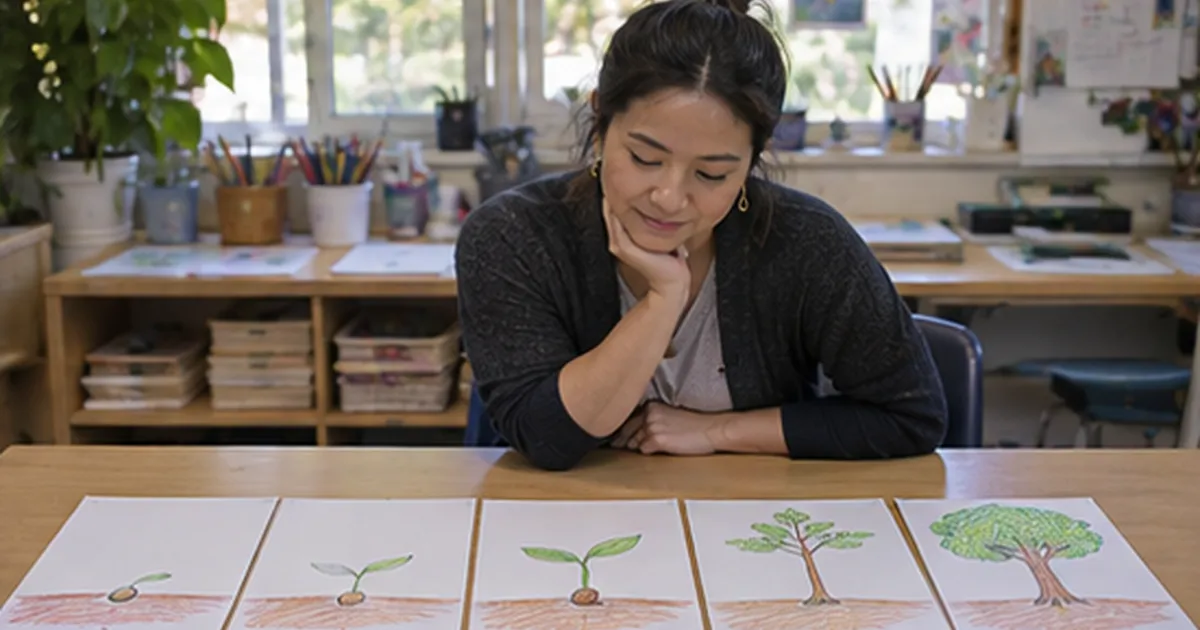
What changes when we shift from asking what a person can do to asking how they came to be able to do it? Imagine a 20-year-old college student solving a complex logic puzzle in seconds—faster than most peers. A static description might label her “highly intelligent” or “naturally gifted.” But a developmental perspective reframes the question: not what she achieved, but how her abilities formed over time, shaped by experiences, supports, and challenges. This shift transforms static labels into dynamic inquiries about pathways and context.
The Puzzle of Rapid Reasoning
At Roovet University, Maya, a third-year cognitive science major, consistently finishes analytical reasoning tasks more quickly than most of her classmates. In a recent timed assessment, she solved 18 out of 20 logic problems in 15 minutes—compared to a class average of 11 correct in 25 minutes. An instructor might interpret this as evidence of strong reasoning ability. But a developmental perspective invites deeper inquiry: What experiences, learning opportunities, and environmental supports may have contributed to Maya’s speed and accuracy?
Consider three static descriptions often used in academic or workplace evaluations:
- “Maya has strong logical reasoning skills.”
- “She learns quickly.”
- “She’s highly motivated.”
Each describes a trait or outcome, but none explain origins or trajectories. A developmental lens transforms these into questions about process:
- Instead of “Maya has strong logical reasoning skills,” we ask: How did Maya develop these skills over time?
- Instead of “She learns quickly,” we ask: What conditions allowed Maya to acquire knowledge efficiently?
- Instead of “She’s highly motivated,” we ask: How did Maya’s motivation evolve in response to feedback, challenges, and goals?
From Trait to Trajectory: Maya’s Story
Maya’s development was not linear. In high school, she initially struggled with abstract reasoning. Her early standardized test scores placed her at the 52nd percentile in logical problem-solving. Her parents enrolled her in a weekly logic and debate workshop from age 14 to 17. Each session included scaffolded challenges: starting with syllogisms, progressing to conditional reasoning, then multi-step inference chains. Over three years, Maya completed approximately 217 structured reasoning tasks, with feedback from instructors after each. By age 17, her performance on similar assessments improved to the 89th percentile. This example is illustrative and does not refer to a real person or documented case.
At age 16, Maya began playing competitive chess, joining a local club. Chess required pattern recognition, forward planning, and adapting strategies—skills that may have complemented her classroom reasoning. Over two years, she played 84 rated games. Her win rate increased from 38% in her first year to 67% in her second. A cognitive psychologist reviewing her gameplay noted a shift: early games relied on memorized openings; later games showed more adaptive mid-game adjustments based on opponent behavior. This example is illustrative and does not refer to a real person or documented case.
In college, Maya joined a peer-led problem-solving group. Sessions followed a protocol: present a logic puzzle, discuss multiple solution paths, critique assumptions. Over two semesters, she attended 28 of 30 sessions. Her final project in cognitive science analyzed 12 reasoning errors in novice solvers, identifying patterns in misinterpretation of conditional statements. This project required synthesizing prior knowledge with new research methods.
These experiences—structured training, strategic play, collaborative learning—formed a developmental pathway. Each phase built on the last, supported by feedback, repetition, and increasing complexity. Her “strong reasoning skills” were not a fixed trait but the outcome of cumulative, context-sensitive learning.
What Can Be Established from Observation?
Observing Maya’s current performance allows limited conclusions. Her speed and accuracy on logic tasks are measurable. But without historical data, we cannot determine whether her ability stems from innate aptitude, early training, or recent practice. The 18/20 score in 15 minutes is a quantitative snapshot—it tells us what she can do now, not how she got there.
Qualitative data—such as practice logs, game records, and session attendance—reveal patterns of engagement and growth. For example, completing 217 workshop tasks suggests sustained, deliberate practice over time. The increase in chess win rate from 38% to 67% indicates improvement, though not steadily linear (a 29-percentage-point gain over two years, averaging 14.5 points per year). Her project analyzing reasoning errors in novices shows metacognitive development: she moved beyond solving problems to analyzing how others approached them. These observations are illustrative and not based on a real study.
Still, observation alone cannot confirm causation. Did the logic workshop cause her improvement? Or did her interest in logic draw her to the workshop, creating a feedback loop? Did chess improve her reasoning, or did her developing reasoning skills make chess more accessible? These questions highlight the limits of cross-sectional data.
Alternative Interpretation: The Role of Context
One plausible alternative interpretation is that Maya’s performance reflects opportunity, not inherent ability. Her family could afford the logic workshop ($120 per semester) and chess club dues ($25 monthly). She attended a high school that offered advanced math and debate—resources not available in all districts. Her college offers peer-led groups, but only 40% of students participate due to work or family commitments.
One plausible alternative interpretation is that Maya’s performance reflects opportunity, not inherent ability. Her family could afford the logic workshop ($120 per semester) and chess club dues ($25 monthly). She attended a high school that offered advanced math and debate—resources not available in all districts. Her college offers peer-led groups, but only 40% of students participate, often due to work or family commitments. If similar training were offered to a diverse group of students, some might show comparable gains. For example, in an illustrative scenario, suppose 38 out of 50 students improved their reasoning scores by at least 30 percentile points after three years of structured practice. Maya’s gain—from 52nd to 89th percentile—was 37 points, within this range. This suggests her outcome could be achievable under supportive conditions, rather than being exceptional.
Further, motivation may not be solely an internal trait but shaped by context. Maya reported feeling 'seen' when instructors gave specific feedback on her logic solutions. In contrast, peers who received only grades (without comments) were less likely to attend optional sessions. This suggests that motivation may be sustained by recognition and cues of growth, not just personal drive. This example is illustrative and not based on a real study or individual.
Transfer: Applying the Lens to Workplace Learning
The same developmental shift applies beyond education. Consider Alex, a 28-year-old project coordinator at a tech firm. His manager describes him as “quick to adapt,” “a natural problem-solver,” and “consistently exceeds expectations.” These are static labels. A developmental approach asks: How did Alex develop these competencies?
Reviewing Alex’s work history: he joined the company two years ago with limited project management experience. His first six months included a structured onboarding program: weekly mentoring, access to a digital toolkit, and small-scale project assignments. He completed 12 training modules, averaging 87% on assessments. After six months, he led a minor workflow redesign, reducing processing time by 18%—a success attributed to iterative testing and team feedback. This example is illustrative and does not refer to a real person or documented case.
Over the next 18 months, Alex managed seven projects. Data show a decline in his error rate: from 3.2 documented issues per project in his first three projects to 0.9 in his last three. His average project completion time decreased from 14.3 days to 9.1 days. These trends suggest skill refinement over time. However, the specific factors contributing to this growth require further exploration.
Interviews suggest that Alex regularly sought feedback after each project. He kept a reflection journal, noting 'What worked,' 'What failed,' and 'One change for next time.' His manager provided biweekly coaching, focusing on decision patterns, not just outcomes. When a project missed a deadline, the discussion centered on communication breakdowns, not blame. This example is illustrative and not based on a real individual.
Like Maya, Alex’s “natural” abilities reflect a developmental pathway. His improvement wasn’t sudden but cumulative, supported by structure, feedback, and reflection. Without knowing his trajectory, one might assume he was simply “gifted.” But the data suggest his competence grew through context-sensitive learning.
From Description to Inquiry
Static descriptions freeze development in time. They answer what is present now, but not how it came to be. A developmental perspective changes the question by centering time, context, and process. It treats ability as an outcome of interaction, not a fixed trait.
Consider the shift in each domain:
- Physical: Instead of “She runs fast,” ask: How has her training, nutrition, and injury history shaped her speed?
- Cognitive: Instead of “He understands complex texts,” ask: What reading experiences and instructional support built his comprehension?
- Psychosocial: Instead of “They’re confident,” ask: How did feedback, relationships, and challenges shape their self-perception?
Each reframing turns a label into a story. It acknowledges that development is neither random nor inevitable, but responsive to conditions. A student’s “quick learning” may stem from prior knowledge, not general intelligence. A worker’s “motivation” may depend on recognition, not personality.
Implications for Educators and Learners
For educators, this perspective encourages attention to process over product. Grading a final essay tells us little about growth. But reviewing drafts, feedback cycles, and revision patterns reveals how a student’s thinking evolved. A teacher might note that a student initially misapplied a theory but, after two rounds of feedback, integrated it correctly—showing conceptual change.
For learners, it fosters agency. If skills are developed, not just possessed, then effort and strategy matter. Maya didn’t “have” reasoning skills—she built them. Alex didn’t “have” adaptability—he practiced it. This view supports resilience: setbacks are not failures of ability but opportunities to adjust strategy.
In workplace settings, performance reviews often emphasize outcomes. A developmental lens suggests adding questions like: What support helped you improve? What challenge led to a shift in your approach? How has feedback influenced your decisions? These questions honor the complexity of growth.
Limitations and Caution
Developmental thinking does not promise equal outcomes. Not all pathways are accessible. Some learners face systemic barriers—underfunded schools, caregiving responsibilities, or limited mentorship. Recognizing context does not erase disparity but makes it visible.
Also, retrospective analysis has limits. We reconstruct pathways from available data, but gaps remain. Maya may have had early informal experiences—family games, books—that aren’t documented. Alex’s confidence might stem from childhood encouragement, not just recent feedback. Development is influenced by invisible histories.
Still, the shift from static to developmental thinking is powerful. It replaces judgment with curiosity. It sees ability not as a fixed point but as a path shaped by time, support, and experience. When we ask how someone came to be able, we open space for more equitable, accurate, and humane understanding.
For the wider context, read Roovet’s guide to developmental psychology across the lifespan or explore the developmental psychology course.