Why Developmental Psychology Matters for Lesson Design
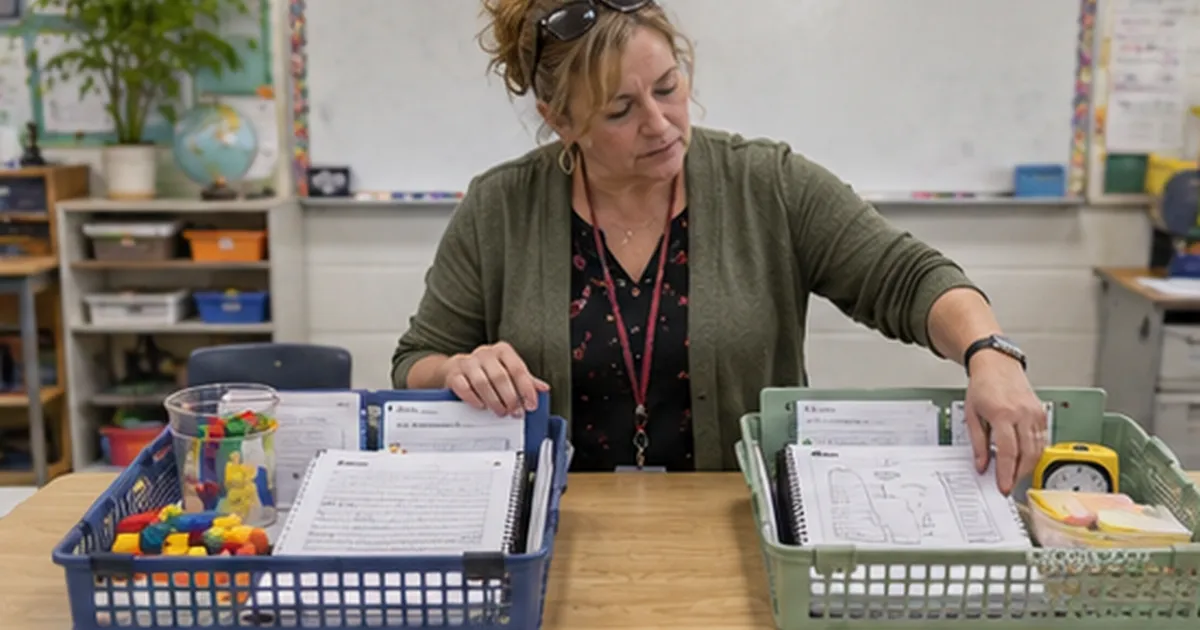
A lesson asks a learner to remember instructions, manipulate materials, and explain a result. When the task goes poorly, the teacher has several places to look. A developmental approach changes one feature, observes the response, and checks what the learner can do next. It turns a broad judgment about readiness into a decision about how to teach.
Understanding Developmental Psychology
Developmental psychology is the study of human development across the lifespan. It examines the physical, cognitive, and social changes that occur as people grow and develop. In the context of lesson design, understanding developmental psychology helps teachers create learning experiences that are tailored to the needs of their students. This involves recognizing that students develop at different rates and that their learning needs vary accordingly. By using evidence to adjust task difficulty, teachers can ensure that students are challenged but not overwhelmed, promoting optimal learning and engagement.
A Hypothetical Case
Consider the hypothetical case of Maria, a 10-year-old student who has recently immigrated to a new country. In her family’s culture, collectivist values are emphasized, where group harmony and interdependence are prioritized. In contrast, the school in her new country emphasizes individualism, encouraging independent work and personal achievement. As Maria adjusts to this new setting, she may find the instructional style unfamiliar or isolating. A teacher informed by developmental psychology might recognize how cultural values influence learning preferences and adapt instruction accordingly. For example, incorporating structured group work could help Maria feel more supported while still meeting curricular goals.
Alternative Explanation
Some might argue that tracking students by stage is an effective way to ensure that they receive instruction tailored to their developmental needs. However, this approach can be problematic, as it assumes that all students develop at the same rate and that their learning needs can be reduced to a single stage or level. In reality, students develop at different rates, and their learning needs are influenced by a complex array of factors, including their cultural background, family dynamics, and prior experiences. By not tracking students by stage, teachers can avoid making assumptions about their students' abilities and instead focus on providing instruction that is responsive to their individual needs.
Useful Observation
Ask about the specific task rather than making a broad judgment about support at home. A family might report that a learner explains the idea aloud in everyday conversation but struggles to put the explanation on paper. The teacher can compare an oral response and a written response to similar questions. If the difference recurs, the next lesson might focus on organizing a written explanation while keeping the subject matter challenging.
Calculation
Suppose a learner answers two of five comparison questions independently and four of five after a worked example. The difference is two additional correct responses on that occasion. The teacher cannot conclude that the learner has mastered the concept: the second set may have been easier, and the example was still available. Try a new set of comparable items the next day without the model. Notice which reasoning steps the learner now supplies independently.
Second Application
Another area where developmental psychology can inform lesson design is in the teaching of social skills. Social skills, such as cooperation, communication, and conflict resolution, are essential for students' success in both academic and personal contexts. However, these skills are not always developed evenly, and some students may require more support and instruction than others. By using evidence to inform their teaching, teachers can provide targeted instruction and support to help students develop the social skills they need to succeed. For example, they might incorporate role-playing activities, group projects, and class discussions to promote social skills development.
Settings Interact
It's essential to recognize that settings interact and that relationships between family and school, historical time, and indirect influences all matter. This means that teachers should avoid equating culture with nationality and instead consider the complex array of factors that influence students' learning needs. By taking a nuanced and contextual approach to lesson design, teachers can create learning experiences that are more effective, supportive, and responsive to the needs of their students.
In conclusion, developmental psychology matters for lesson design because it provides a framework for understanding the complex and dynamic nature of human development. By using evidence to adjust task difficulty, teaching, and reassessing, and avoiding the tracking of students by stage, teachers can create learning experiences that are tailored to the needs of their students. This approach recognizes that settings interact and that relationships between family and school, historical time, and indirect influences all play a significant role in shaping a student's development. By incorporating this understanding into their teaching practice, educators can promote optimal learning and engagement, leading to better academic outcomes and a more positive educational experience for all students.
Applying Developmental Psychology in a New Context
Imagine a fictional student, 10-year-old Jaden, who has recently transferred from an urban city to a rural school. His family has experienced a change in socioeconomic circumstances due to the move, and Jaden appears to be adjusting slowly to the new environment. The teacher, Ms. Thompson, observes that Jaden is hesitant to participate in class and sometimes struggles with assignments. To support him, she considers how developmental psychology principles might guide her approach—specifically, how transitions, family context, and prior experiences can shape learning needs.
Considering Indirect Influences
Ms. Thompson recognizes that indirect influences, such as family-school relationships, can affect Jaden’s engagement. She decides to contact his parents to better understand their perspectives on education and to explore how they might support learning at home. This collaborative approach acknowledges that student success is shaped by multiple contexts. To apply this concept, consider: How might Ms. Thompson adjust her teaching to account for Jaden’s recent transition, changes in socioeconomic context, and potential gaps in academic or social support?
Adjusting Task Difficulty
To support optimal learning, Ms. Thompson considers adjusting task difficulty to better match Jaden’s current abilities. Tasks that are too easy may fail to engage him, while those that are too difficult could lead to frustration and reduced confidence. By using formative assessment and observation, she can identify an appropriate level of challenge. For example, she might scaffold assignments, offer choices in how students demonstrate learning, or provide additional modeling. These strategies aim to balance support with autonomy, helping Jaden build both skills and self-efficacy over time.
Answer
To apply developmental psychology principles, Ms. Thompson considers the range of factors that may affect Jaden’s learning, including his recent transition, family context, and prior school experiences. Recognizing that development is shaped by interacting systems, she avoids making assumptions based on age or background alone. Instead, she uses ongoing observation and interaction to tailor instruction. Strategies such as differentiated tasks, flexible grouping, and student choice can help meet diverse needs. By focusing on individual strengths and challenges rather than fixed stages, Ms. Thompson fosters a responsive and inclusive classroom environment.
Teaching Social Skills
Developmental psychology also highlights the importance of supporting social skill development, such as cooperation, communication, and conflict resolution. These skills are crucial for academic collaboration and personal relationships. Ms. Thompson might use evidence-based strategies like structured group work, guided role-playing, or regular class meetings to help students practice and reflect on social interactions. Because social development varies widely among individuals, instruction should be explicit, consistent, and sensitive to cultural differences in communication styles and norms.
Settings Interact
It's essential to recognize that settings interact and that relationships between family and school, historical time, and indirect influences all matter. Ms. Thompson should avoid equating culture with nationality and instead consider the complex array of factors that influence Jaden's learning needs. By taking a nuanced and contextual approach to lesson design, Ms. Thompson can create learning experiences that are more effective, supportive, and responsive to the needs of her students. This approach recognizes that settings interact and that relationships between family and school, historical time, and indirect influences all play a significant role in shaping a student's development. By incorporating this understanding into her teaching practice, Ms. Thompson can promote optimal learning and engagement, leading to better academic outcomes and a more positive educational experience for all students.
For the wider context, read Roovet’s guide to developmental psychology across the lifespan or explore the developmental psychology course.