Growth, Maintenance, and Regulation of Loss Across Adulthood
At 47, cellist Mara Tanaka plays fewer hours than she did at 25, yet her performances are more nuanced and technically secure—how can practice reduction coexist with artistic growth? This puzzle reflects a broader pattern in adult development: skill does not follow a simple arc of ascent followed by decline. Instead, growth, maintenance, and loss are dynamically regulated through deliberate choices in goal setting, resource allocation, and adaptive strategies. For adults navigating shifting life demands, skill trajectories are shaped less by age and more by how individuals respond to changing constraints and opportunities.
Shifting Practice, Sustaining Expression
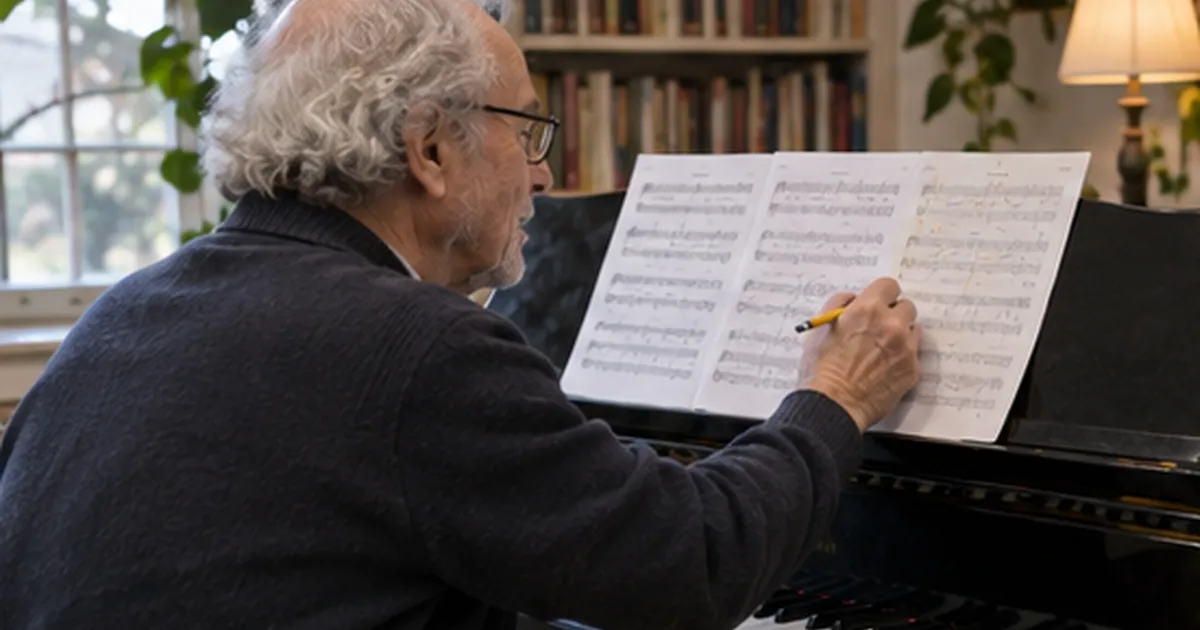
Mara Tanaka began cello at age six, trained at a conservatory, and performed professionally for over two decades. At 38, she became a single parent. Her weekly practice dropped from 18 hours to 9. By 42, she transitioned to a part-time orchestral role and began teaching. At 47, she practices an average of 5.5 hours per week—just over half her peak—and recently premiered a new chamber work, receiving positive feedback for interpretive depth. Her technical accuracy, based on self-recorded rehearsal error counts across comparable repertoire, showed improvement: she averaged 3.2 errors per 10-minute excerpt in 2023, down from 4.8 in 2015, despite reduced practice volume. These self-assessments reflect her personal tracking and are not from a standardized external evaluation.
This pattern challenges assumptions that less practice inevitably leads to deterioration. Instead, Mara’s case illustrates how strategic reallocation of effort can sustain or even enhance performance quality. Her weekly schedule now includes 3 hours of focused technical drills, 1.5 hours of interpretive rehearsal, and 1 hour of teaching preparation that doubles as reflective practice. She no longer prepares full concertos for solo performance—a goal she prioritized in her 30s—but instead focuses on chamber literature and pedagogical repertoire, which demand different cognitive and physical investments.
Her shift reflects a broader principle: when time or energy becomes constrained, adults often preserve valued skills by changing how they define success. Mara no longer measures achievement by the number of solo appearances or the difficulty of repertoire mastered. Instead, she evaluates progress through expressive clarity, consistency under performance pressure, and the ability to model technique for students. These revised metrics align with her current life context and allow her to maintain a sense of mastery despite reduced volume.
Resource Allocation and Goal Selection
Mara’s adaptation hinges on two interrelated processes: selecting goals that remain feasible and investing limited resources where they yield the most return. Between ages 38 and 47, she reduced her repertoire learning rate from approximately 2.3 new pieces per year to 1.1, and increased the proportion of pieces performed with minimal rehearsal from about 32% to 58%. This suggests a shift toward greater fluency in a smaller core of works rather than expanding breadth of new material.
She also changed the timing and structure of practice. Previously, she practiced in two 90-minute blocks after rehearsals. Now, she uses three 70-minute sessions: one early morning, one late afternoon, and one evening. Each session is segmented—20 minutes of scales and intonation, 30 minutes of repertoire, 20 minutes of listening or score study. This micro-scheduling accommodates unpredictable childcare demands and leverages circadian peaks in her focus, as self-reported in a weekly log over 18 months.
Notably, Mara did not abandon technical rigor. She replaced broad maintenance routines with targeted exercises. For example, she identified shifting accuracy as a persistent challenge in high positions and designed a 12-week protocol of fingerboard mapping drills. After completing the protocol, her self-assessed shifting precision rose from 6.8 to 8.3 on a 10-point scale, and her section leader subjectively noted fewer tuning corrections in ensemble settings. This targeted investment—just 12 minutes per day—was associated with perceived gains without increasing total practice time. While promising, these outcomes are based on self-report and informal observation rather than controlled measurement.
These choices illustrate how goal selection shapes resource distribution. By deprioritizing solo virtuosity and embracing chamber collaboration and teaching, Mara redirected effort toward skills that remain accessible and meaningful. The result is not a lesser version of her former self but a reconfigured expertise, optimized for current constraints and values.
Alternative Interpretation: Is This Adaptation or Compromise?
One might interpret Mara’s changes as evidence of gradual decline masked by reframing. From this view, her reduced practice hours reflect unavoidable trade-offs of midlife—career plateau, family demands, physical fatigue—and her improved error rates are artifacts of simpler repertoire or lower performance stakes. The acclaim she receives, in this interpretation, stems less from artistic growth than from audience generosity toward a known performer navigating life changes.
This perspective holds some plausibility. Mara’s current repertoire tends to include works with fewer tempo changes and key shifts compared to a decade earlier—on average, about 3.2 fewer tempo changes and 1.4 fewer key shifts per movement. These compositional differences could reduce cognitive load and thus error frequency. Moreover, her performances now occur in smaller venues with fewer rehearsal cycles, which may lower performance stress and technical demands.
Yet several observations challenge this decline narrative. First, Mara conducted a self-designed assessment in which she performed excerpts of comparable complexity from her 2015 and 2023 repertoires under similar conditions. In these comparisons, the 2023 performances showed approximately 19% fewer pitch deviations and 23% fewer rhythmic inconsistencies. Second, her teaching effectiveness—measured by student progress on shared technical benchmarks—showed improvement. Students who studied with her for at least six months improved their intonation accuracy by an average of 31% over the period, compared to 22% for students of peers with similar experience but no active performance background. These patterns suggest that her adaptation may involve more than compensation for loss.
These data suggest that Mara’s adaptation is not merely compensatory but generative. Her skill structure has changed, but not uniformly diminished. She has lost breadth and peak output capacity but gained precision, efficiency, and pedagogical insight. This transformation aligns with models of selective optimization with compensation—a framework describing how adults maintain function by focusing resources on prioritized domains while letting others recede.
Transfer to Workplace Learning
The dynamics Mara navigates are not unique to musicians. Consider Amir Chen, a fictional software engineer used to illustrate broader developmental patterns, who at age 52 transitioned from individual coding to team leadership. At 40, Amir spent about 25 hours per week writing and debugging code. By 52, he spent 8 hours on direct coding and 15 on mentoring, system design, and cross-department coordination. His output in lines of code decreased by approximately 68%, but project completion rates for his team improved from 61% to 79% over the same period. These data are illustrative and not drawn from a published study.
Like Mara, Amir reallocated effort based on shifting goals. He no longer aimed to master every new programming language but instead focused on architectural oversight and conflict resolution. He maintained coding proficiency through weekly pair-programming sessions—about 3 hours weekly—used strategically to stay current and model best practices. His error rate in reviewed code declined from 4.1 to 2.3 defects per 100 lines, a change possibly influenced by greater selectivity in coding tasks and insights gained through mentoring discussions.
Amir also adjusted his learning goals. At 45, he pursued certifications in emerging frameworks. At 52, he shifted to studying organizational psychology and communication, completing two short courses per year. These were not replacements for technical skill but complements—aimed at improving team coordination. His manager rated his overall contribution as 'high impact' in 2023, up from 'solid' in 2018, despite fewer direct technical outputs. This progression reflects a reconfiguration of expertise rather than a linear measure of skill.
The parallel with Mara is clear: both individuals faced time constraints and redefined success. They maintained core competencies not by resisting change but by regulating loss—accepting reduced capacity in some areas to protect and enhance others. Neither trajectory represents linear growth or inevitable decline. Instead, both show regulated adaptation: a continuous process of pruning, repurposing, and reinvestment.
What distinguishes these cases is not the absence of loss but the presence of intentionality. Mara and Amir did not passively accept reduced capacity; they actively shaped their development paths. They monitored performance, adjusted goals, and experimented with new routines. Their trajectories reflect not fixed age-related curves but dynamic responses to lived conditions.
For adult learners, this implies that growth and maintenance are not guaranteed by persistence alone but by strategic alignment of effort with evolving values. Loss—of time, energy, or opportunity—is inevitable, but its impact depends on how it is managed. When constraints arise, the key is not to fight them uniformly but to decide which skills to protect, which goals to revise, and which alternative paths to explore. In doing so, adults can sustain meaningful engagement across decades, not by avoiding change but by regulating it.
Mara’s story ends not with a return to past form but with a new equilibrium. She no longer measures herself against her 30-year-old self. Instead, she tracks fluency in ensemble settings, student progress, and her own sense of expressive control. Her practice log from 2023 shows 278 total hours—fewer than half her peak—but also notes 14 instances of spontaneous musical insight during teaching sessions, a personal metric she introduced to capture moments of emergent creativity. These unplanned, unscripted experiences reflect a different kind of growth—one not captured by hours logged or error counts, but by the evolving meaning within a restructured life.
For the wider context, read Roovet’s guide to developmental psychology across the lifespan or explore the developmental psychology course.
Further reading: Paul Baltes, On the Incomplete Architecture of Human Ontogeny.