Learning a New Skill in Later Adulthood
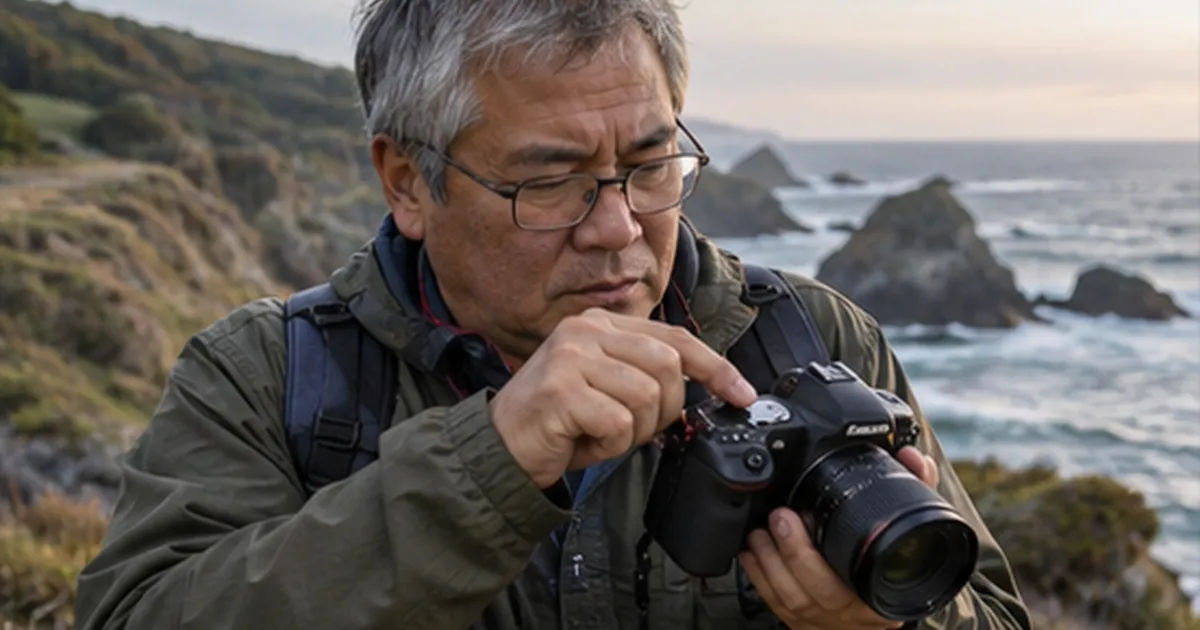
Someone who has composed photographs for years can still struggle to find the controls on an unfamiliar camera. A slow first attempt tells us that this task is new under these conditions. To study learning in later adulthood, distinguish the person's goal, prior experience, and opportunities for practice, then see whether what was learned transfers to a new shot.
A camera check that tests transfer
Ask a learner to photograph a flower against a bright window, then change the location and ask for a portrait in softer light. Someone who memorized where to press may repeat the exact operation even when the photograph calls for a different adjustment. Someone who can explain what changed and choose a suitable control has shown a different kind of understanding. Allow time to locate unfamiliar controls before judging the choice. Comparing these two attempts gives more useful feedback than recording only how quickly the first photograph was taken.
Understanding Age-Related Changes
Age bands describe broad patterns of development, but they do not represent deadlines or universal sequences. Social, physical, and cognitive changes occur at different rates and times for each individual, and these changes need to be considered separately. For example, some people may experience significant physical changes in their 60s, while others may remain physically active and healthy well into their 70s and 80s. Similarly, cognitive changes vary widely; some individuals may notice subtle shifts in memory or processing speed, while others maintain strong cognitive functioning. These differences reflect individual variation, not inevitable decline.
A Hypothetical Case
Consider the fictional case of Emily, a 62-year-old retired teacher who has always wanted to learn how to play the piano. Despite having no prior musical experience, Emily is eager to start taking lessons and practicing regularly. She is concerned about how aging might affect her ability to learn something new. With guidance from her instructor, Emily adapts her pacing and practice schedule to suit her needs. She begins with short practice sessions and gradually increases their duration and frequency as she becomes more comfortable. Emily also practices transfer, applying the discipline and focus she develops through piano practice to other activities, such as reading and journaling. Her experience illustrates how tailored strategies can support skill acquisition in later adulthood.
Adapting Pacing and Practice
Adapting pacing and practice is important when learning a new skill in later adulthood. Some older adults may benefit from adjusting their practice routines to account for individual differences in energy, attention, or physical comfort. Breaking complex tasks into smaller steps and practicing consistently can support learning and confidence. Incorporating light physical activity, such as walking or stretching, may contribute to overall well-being and alertness. Emily's instructor encourages regular breaks and relaxation techniques like deep breathing to help manage fatigue and support concentration—strategies that can be helpful for many learners, regardless of age.
Alternative Explanation
Some people may believe that older adults are less able to learn new skills, and that efforts are better spent maintaining existing abilities. However, research suggests that many adults continue to learn and adapt throughout life. Engaging in new learning can be associated with positive cognitive and emotional experiences, such as increased engagement, a sense of progress, and improved mood. While individual outcomes vary, challenging oneself in meaningful ways can contribute to resilience and a sense of purpose. These benefits are not guaranteed for everyone, but they highlight the value of opportunity and support in later-life learning.
Useful Observation
An observed pattern in adult learning is that older adults often engage more deeply when learning is personally meaningful. When skills connect to long-standing interests or values, individuals may be more motivated to persist through challenges. In Emily’s case, her interest in music and creative expression helps sustain her through the initial difficulties of learning piano. As she continues, she finds that the process itself brings enjoyment and a renewed sense of accomplishment, even if progress is gradual.
Second Application
The strategies of adjusting pacing, practicing transfer, and building on personal interest can apply to many domains beyond music. For example, an older adult beginning to learn a new language might start with everyday phrases and gradually expand to reading or conversation. Including regular movement, such as walking or gentle yoga, and using relaxation techniques like meditation may support attention and emotional regulation. Learners might also apply new skills in different contexts—using language practice to connect with family or using problem-solving strategies from one activity in daily life. These approaches emphasize flexibility and personal relevance rather than universal prescriptions.
Distinguishing Observations from Inferences
It is important to distinguish between direct observations and interpretations when supporting adult learners. Observations—such as noticing that someone takes more time on a task or pauses frequently—should not automatically lead to conclusions about ability. Such behaviors may reflect unfamiliarity, fatigue, or a cautious approach rather than limitations. By focusing on observable details and avoiding assumptions, educators and learners can create supportive environments that encourage growth without premature judgments.
Learning a new skill in later adulthood requires a willingness to adapt and be open to new experiences. By distinguishing between unfamiliarity and incapacity, adapting pacing and practice, and leveraging personal interest and motivation, older adults can successfully learn new skills and improve their overall well-being. As Emily's story illustrates, with the right approach and mindset, older adults can build confidence, mastery, and a sense of purpose, and can continue to grow and develop throughout their lives.
Applying the Concept to a New Situation
Imagine that you are a 65-year-old retired teacher who has always been interested in painting. You have never had any formal training, but you have always been fascinated by the work of impressionist artists. You decide to take a painting class at a local art studio, but you are worried that you may not be able to keep up with the younger students or that you may not have the physical dexterity to handle the brushes. The class meets once a week for two hours, and the instructor encourages students to practice at home between classes. You are eager to learn, but you are not sure how to adapt the pacing and practice to accommodate your needs and abilities.
Your Task
Apply the concept of adapting pacing and practice to your own learning situation. How would you modify the practice schedule to accommodate your physical and cognitive limitations? What strategies would you use to build confidence and mastery, and how would you leverage your personal interest and motivation to stay engaged and motivated? Consider the importance of distinguishing between observations and inferences, and think about how you would avoid making assumptions about your own abilities or limitations.
A Reasoned Answer
To adapt pacing and practice to your needs, you could break the painting process into smaller steps—such as starting with basic brushwork or color mixing—then gradually build toward more complex techniques. You might adjust your practice schedule to include shorter, more frequent sessions with breaks to reduce physical strain. Setting small, realistic goals—like completing a simple sketch or mastering a specific stroke—can help build confidence. Choosing subjects that inspire you, such as landscapes or scenes from personal experience, can sustain motivation. If you notice difficulty with a technique, it may indicate a need for more practice or clarification, not a fixed limitation. Staying open to feedback and incremental progress supports ongoing learning.
Additional Considerations
In addition to adjusting pacing and practice, some learners find that light physical activity, such as walking or stretching, supports focus and comfort. Relaxation strategies like deep breathing or brief meditation may help manage stress and improve concentration. Applying skills like observation or patience from painting to other areas of life can enhance everyday experiences. Sharing artwork with others—through informal showings or community groups—may provide encouragement and connection. A holistic approach that includes physical comfort, emotional engagement, and social interaction can enrich the learning process, though individual preferences and circumstances will vary.
Final Thoughts
Learning a new skill in later adulthood requires a willingness to adapt and be open to new experiences. By applying the concepts of adapting pacing and practice, leveraging personal interest and motivation, and distinguishing between observations and inferences, you can successfully learn to paint and enjoy the many benefits that come with it. Remember to be patient and kind to yourself, and to focus on making progress rather than achieving perfection. With the right approach and mindset, you can build confidence, mastery, and a sense of purpose, and can continue to grow and develop throughout your life. Whether you become a skilled painter or simply enjoy the process of learning, the experience of taking a painting class can bring joy, fulfillment, and a sense of accomplishment to your life.
For the wider context, read Roovet’s guide to developmental psychology across the lifespan or explore the developmental psychology course.