Perspective Taking: When Two People See Different Things
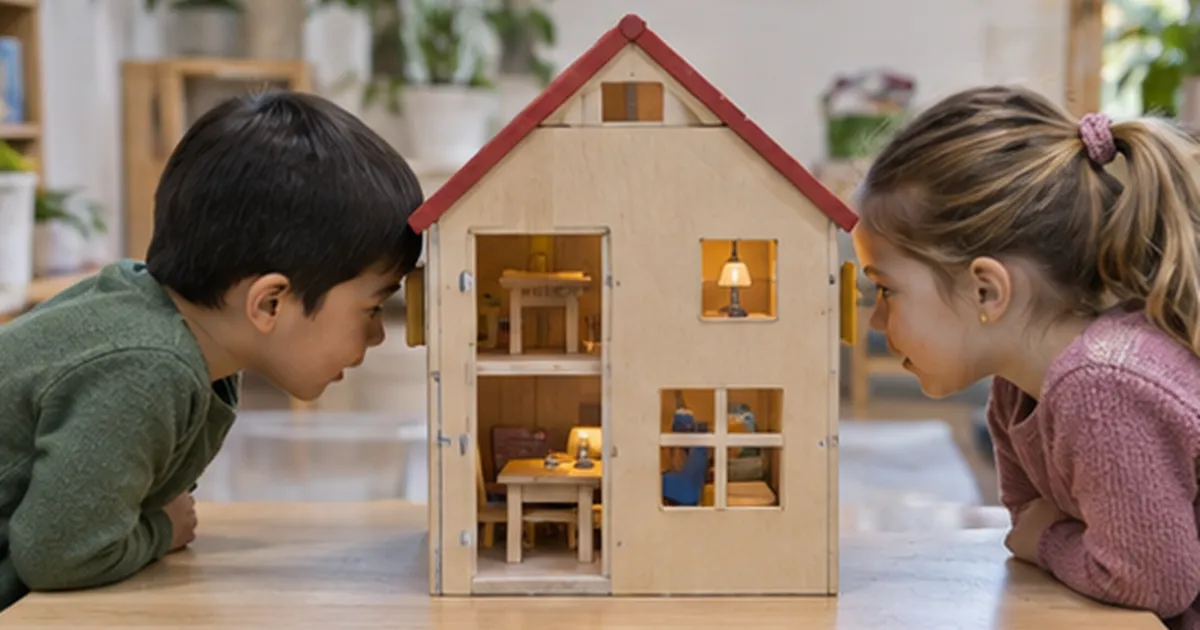
Two children sit on opposite sides of a toy house. One sees the front door; the other sees the back window. Knowing what a partner can see is one kind of perspective taking. Working out what that partner knows or believes requires additional evidence about what happened earlier. A good observation keeps those questions separate.
A toy house with two views
Place a small figure in front of one window of a toy house. A child on that side can see it, while a partner looking at the solid back wall cannot. Ask what each person can see before asking what either person knows. Suppose the partner watched you place the figure there a moment earlier. The partner can know where it is despite being unable to see it now. This change to the example keeps the visual arrangement constant while changing the partner’s information. It illustrates why an answer about seeing cannot automatically be scored as an answer about belief.
A Classroom Scene: The Dropped Pencil
It’s 10:15 a.m. in Room 207 at Lincoln Heights High. Ms. Tran is writing a quadratic equation on the whiteboard. Maya, seated in the front row, drops her pencil. It rolls under her desk and stops near the baseboard. She doesn’t retrieve it immediately. From his seat near the back, Jamal sees Maya bend down slightly but doesn’t see the pencil. He later tells a friend, 'Maya was zoning out during math—she just stared at the floor.'
Across the room, Leo, seated to Maya’s left, saw the pencil fall. He watched her glance down, hesitate, then leave it. He says, 'She dropped her pencil but didn’t want to interrupt, so she waited.'
At lunch, the story spreads. One version says Maya was unfocused. Another says she was respectful. Both are plausible. But only Leo had full visual access to the pencil’s fall. Jamal inferred behavior from partial data. Maya herself knows what happened, but her knowledge includes internal states—her intention not to interrupt—that others can’t observe.
This vignette illustrates a key distinction: visual access refers to what a person can directly perceive from their vantage point. Knowing involves justified true belief, often supported by direct observation or reliable information. Believing is a mental state that may or may not align with observable facts. Jamal believes Maya was distracted, based on what he saw. Leo knows more because his visual access was broader. Maya knows most of all, including what she intended.
What Each Observer Can Establish
Let’s analyze each student’s position.
- Maya has full knowledge from her own experience: she felt the pencil slip, saw it fall, and chose not to retrieve it. Her belief and knowledge align. She also knows her internal state—her intention not to interrupt—but this is not observable by others.
- Leo had partial visual access. He saw the pencil drop and Maya’s slight movement. From this, he can reasonably infer she noticed it but didn’t pick it up. His knowledge is limited to observable events, but it’s accurate within that scope. He doesn’t know her reasons, only her actions.
- Jamal had restricted visual access. He saw Maya look down but not the pencil. He lacks the context to interpret her behavior accurately. His belief—that she was zoning out—is a plausible interpretation, but not supported by full data. His inference goes beyond what he saw.
The gap between Jamal’s belief and the actual event isn’t due to dishonesty or poor observation. It’s a function of limited perspective. Visual access sets the boundary for what can be known through direct observation. Beyond that boundary, people fill gaps with assumptions.
Interpretation and Inference
Jamal’s interpretation isn’t irrational. People naturally construct narratives to make sense of partial information. In this case, a student looking down during a lesson is commonly associated with inattention. But common associations aren’t always accurate. Leo’s view included the pencil, so his interpretation differed. Both students used the same cognitive process—linking behavior to meaning—but with different inputs.
Here’s where the distinction matters: visual access determines what can be observed; knowing requires justification and truth; believing requires only a mental commitment. Jamal believes Maya was distracted. That belief may feel certain to him, but it’s not knowledge—it’s not fully justified by evidence, even if it seems reasonable. Leo’s belief is better justified because it’s grounded in broader visual access. Maya’s knowledge includes both direct observation and introspection, giving her a more complete understanding.
It’s also worth noting that none of the students have access to the full social context. Maya’s decision not to interrupt might reflect classroom norms, her relationship with the teacher, or her own learning style. These aren’t visible. So even Leo, with better visual access, doesn’t know Maya’s full reasoning—only that she didn’t retrieve the pencil.
The Limits of Perspective
This scenario plays out daily in classrooms, workplaces, and homes. A manager might believe an employee is disengaged because they’re not speaking in meetings. But if the employee is listening, taking notes, and contributing in writing, the manager’s belief may not reflect reality. Their visual access is limited to verbal participation.
Likewise, a student might believe a peer isn’t trying because they don’t raise their hand. But if the peer is processing information differently—perhaps due to language fluency, anxiety, or learning preferences—their lack of visible participation doesn’t indicate lack of effort.
Age bands describe broad patterns in development, but they don’t dictate what any individual can see or understand at a given moment. A 14-year-old might infer social cues more accurately than a 17-year-old, depending on experience, not age. Social, physical, and cognitive changes unfold on different timelines and require separate evidence. Assuming developmental readiness based on age alone risks misreading behavior.
Transfer to the Workplace
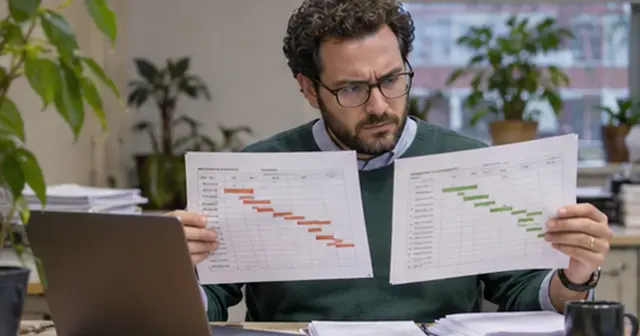
Consider a team meeting at a design firm. Two project managers, Sam and Taylor, review a timeline. Sam says, ‘I noticed Jordan didn’t speak today. They might be losing interest in the project.’ Taylor replies, ‘I saw Jordan taking notes and nodding. They were engaged.’
Again, visual access shapes interpretation. Sam, seated across the table, couldn’t see Jordan’s notebook. Taylor, sitting beside them, saw the notes being written. Neither saw Jordan’s internal state. But Taylor had more visual data.
If the team acts on Sam’s belief—perhaps by assigning Jordan fewer tasks—they might misallocate resources or undermine morale. But if they consider visual access, they might ask: What did each of us see? What are we inferring? What might we be missing?
A simple exercise could clarify: at the end of the next meeting, each person shares one observed behavior and one inference. Sam might say, ‘I saw Jordan remain silent. I inferred they were disengaged.’ Taylor might say, ‘I saw Jordan write for three minutes during the budget discussion. I inferred they were engaged.’ The team now has a more complete picture.
This doesn’t resolve everything. Jordan might have been taking notes on an unrelated topic. But the practice of distinguishing observation from inference reduces assumptions. It shifts the focus from what people seem like to what people are doing, based on what can be seen.
Designing for Broader Access
In both classrooms and workplaces, physical arrangement affects visual access. In the high school example, students in the back have limited sightlines. Round tables, flexible seating, or digital tools like shared documents can increase shared visibility.
One fictional school, Cedar Ridge Academy, piloted a seating rotation every six weeks. Students tracked how their observations changed. After one cycle, 78% reported noticing behaviors they’d previously missed—such as a peer signaling confusion with a hand gesture only visible from the left side of the room. No academic outcomes were measured, but teachers noted more balanced participation in discussions. This example is illustrative and does not reference a real study or institution.
Similarly, in virtual meetings, camera placement and screen-sharing settings influence what team members can see. A participant might believe a colleague is multitasking because their camera is off. But if the colleague is actively contributing in the chat, that belief may be unfounded. Visual access in digital spaces is just as consequential as in physical ones.
Revisiting the Original Puzzle
When two people see different things, it’s not always that one is wrong. Often, they’re seeing different parts of the same scene. The student who believes Maya was distracted isn’t lying. The one who says she was attentive isn’t mistaken. They’re reporting different slices of reality, filtered through their vantage points.
Knowing requires more than belief. It requires evidence, truth, and justification. Visual access provides the raw material for knowledge—but only if we recognize its limits. Belief can form quickly, on partial data. Knowledge develops more slowly, through comparison, reflection, and dialogue.
In the end, perspective taking isn’t just about empathy. It’s about precision. It’s asking: What did you actually see? Not what do you think it means, but what entered your field of vision? From there, we can build shared understanding—not by agreeing on feelings, but by aligning on observable facts.
The next time someone interprets a quiet moment as disengagement, or a glance as disrespect, consider the possibility: maybe they just didn’t see the pencil fall.
For the wider context, read Roovet’s guide to developmental psychology across the lifespan or explore the developmental psychology course.