Symbolic Play: How a Box Becomes a Bus
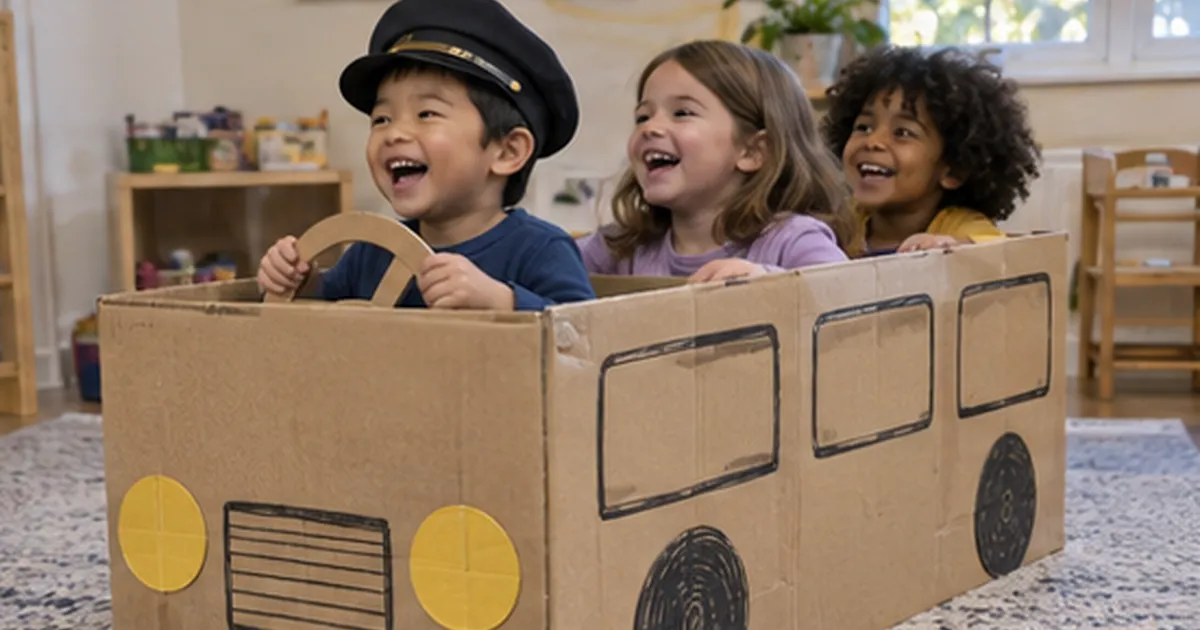
A cardboard box becomes a bus not because it resembles one perfectly, but because a child and a play partner agree it does. In a sunlit corner of a preschool classroom, four-year-old Mira drags a large appliance box into the center of the rug. She climbs inside, peers out one open end, and announces, We need tickets to ride! Her teacher, Mr. Ellis, responds, One ticket, please! Mira hands over a scrap of paper. The box now has rules: only those with tickets may board, and departure happens only after a countdown. The transformation isn’t visual—it’s symbolic, governed by shared understanding. This moment reveals how representation in play emerges not from physical accuracy but from negotiated meaning, rule adoption, and flexible interpretation. The box is a bus because Mira says so, Mr. Ellis accepts, and others follow the emerging script. But what evidence does such play offer about cognitive development, and how might different observers interpret the same scene?
The Worked Example: Mira’s Cardboard Commute
Over the course of about 20 minutes, Mira’s cardboard bus evolves through distinct phases. Initially, she sits alone, rocking slightly and making engine noises. Mr. Ellis approaches and asks, Is this a bus? Mira nods. He replies, Can I get on? I have a red ticket. Mira inspects the paper he offers and says, Only blue tickets today. Mr. Ellis pretends to search his pockets and produces a blue scrap. He boards. Mira counts to three, then shouts, Departing! and rocks the box forward.
Next, two classmates join. One, Leo, tries to board without a ticket. Mira blocks him. No ticket, no ride, she insists. Leo produces a yellow paper. Mira pauses, then says, Yellow’s okay if it’s folded twice. Leo folds it, and Mira nods. The rule has been modified through negotiation. Later, another child, Sam, attempts to climb on top of the box. Mira objects: That’s the roof! You can’t stand on the roof! The box now has both functional and spatial roles—interior for passengers, exterior as structure.
After about 18 minutes, Mira announces a breakdown. She makes sputtering sounds and declares, No more blue tickets until the engine’s fixed. Mr. Ellis asks, Can I be the mechanic? Mira agrees but specifies, Only if you wear goggles. A pair of plastic safety goggles is produced, and Mr. Ellis dons them. The repair takes a couple of minutes, after which service resumes. The play ends when Mira declares, Last stop! and exits the box.
Tracing Representation: From Object to Symbol
The box’s transformation into a bus illustrates symbolic representation—the use of one object to stand for another. The box shares minimal physical traits with a real bus: no wheels, no engine, no seating layout. Yet Mira and her peers accept its symbolic role. This suggests that representation in early play depends less on perceptual similarity and more on functional alignment. The box has an enclosed interior, a defined entrance, and capacity for multiple occupants—features that map loosely onto a bus’s structure.
Crucially, the symbol is not fixed. When Mira declares a breakdown, the box ceases to function as a bus and becomes a disabled vehicle. Its symbolic identity shifts with narrative demands. This flexibility indicates that representation is dynamic, not static. The same object can support multiple roles across time, contingent on group agreement.
Further, the symbol extends beyond the box. Tickets—scraps of paper—are also representational. Their value lies not in material form but in their assigned role. When Mira rejects a red ticket but accepts a folded yellow one, she demonstrates that symbolic meaning can be conditional. Rules govern the symbol’s validity, reinforcing that representation in play is rule-bound as much as it is imaginative.
Shared Rules: The Architecture of Joint Play
The bus scenario operates within a system of shared rules, co-constructed by participants. Initially, Mira sets a simple rule: tickets are required. Mr. Ellis complies, reinforcing the rule’s legitimacy. When Leo offers a yellow ticket, Mira could reject it outright, but instead she modifies the rule—folding allows acceptance. This adaptation shows that rules in symbolic play are not rigid; they are negotiable and subject to revision through interaction.
Over the episode, several distinct rules emerge through interaction:
- Only those with tickets may board (introduced early in the play)
- Blue tickets are preferred; red tickets are not accepted at first
- Yellow tickets are acceptable if folded twice (a rule Mira introduces later)
- No standing on the roof (established during the play)
A fifth rule is introduced later: only a mechanic wearing goggles may repair the engine. Each rule is introduced by Mira or through dialogue, then tested and upheld by others. Compliance is not enforced through authority but through mutual recognition. When Sam tries to stand on the box, he stops after Mira objects—not because she is older or louder, but because he recognizes her role as the play’s organizer.
The stability of these rules varies. The ticket requirement persists throughout, while the color rule is relaxed. The goggles rule is temporary, lasting only during the repair sequence. This variability suggests that shared rules in play serve both structural and narrative functions: some provide continuity (tickets), while others advance the story (goggles).
Notably, no rule is written or formally taught. They emerge organically through action and response. Mr. Ellis does not instruct Mira on how to run a bus; he responds within her framework. This peer-like participation supports rule internalization without direct correction. The rules are not imposed; they are adopted.
Alternative Interpretation: Is This Really Symbolic?
One might argue that Mira’s play is not truly symbolic but merely imitative. Perhaps she is copying a real bus ride she experienced, mimicking behaviors without abstract representation. After all, she may have seen ticket checks and engine repairs and is reproducing them in sequence. From this view, the box remains a box, and the actions are a sequence of learned behaviors rather than evidence of symbolic thought.
This interpretation gains some support from the specificity of the actions: ticket checks, countdowns, mechanical repairs. These are concrete routines, not abstract concepts. If Mira were engaging in pure symbolism, one might expect more fantastical elements—a flying bus, a ticket made of leaves, a mechanic with a banana tool. Instead, the play adheres closely to real-world logic.
However, this view underestimates the cognitive work involved in imitation. Even replicating a real scenario requires mental representation—the child must recall, select, and reassemble elements from memory. Moreover, Mira introduces variations: the folding rule for yellow tickets has no real-world parallel. The goggles requirement is her invention. These deviations suggest not mere copying, but transformation. She is not reenacting a past event; she is constructing a new one using real-world elements as building blocks.
Furthermore, the box’s role is not literal. No one believes it is a real bus. The participants act as if it is, maintaining the pretense even when inconvenient (blocking Sam from the roof). This as if stance is central to symbolic behavior. It requires holding two ideas simultaneously: the box is cardboard, and the box is a bus. The alternative interpretation struggles to explain this dual awareness.
Transfer to Another Context: Rules in Workplace Collaboration
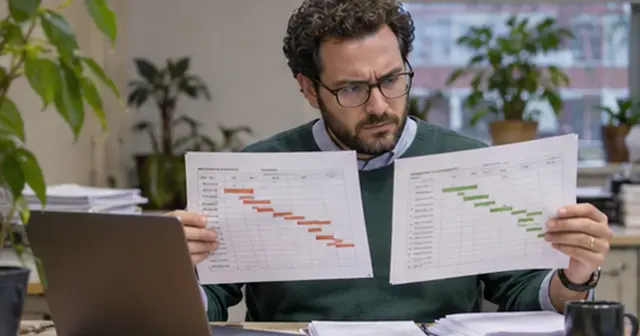
The dynamics observed in Mira’s play resemble patterns in adult collaborative settings, though in less overtly symbolic forms. Consider a team of project managers in a tech firm using a shared digital dashboard to track software development. The dashboard displays colored blocks—green for complete, yellow for in progress, red for delayed. Like Mira’s box, the dashboard is a representational tool: the blocks do not are the tasks; they stand for tasks.
Initially, the team agrees that any task marked red for more than three business days requires a review meeting. This is a shared rule, similar to Mira’s ticket policy. Over time, exceptions arise. One member argues that a red block caused by external vendor delays should not trigger a meeting. After discussion, the team modifies the rule: red tasks require review only if internal progress is stalled. The rule, like Mira’s color policy, becomes conditional.
Later, a new employee joins and attempts to mark a task as complete without peer validation. A senior member intervenes: We need two approvals before green. The rule is not written in the software but is understood through practice. Compliance depends on mutual recognition, not enforcement. Just as Sam stopped when Mira objected, the new employee revises the entry.
When a critical bug emerges, the team declares a code freeze—a temporary halt to new changes. Like Mira’s breakdown, this shifts the system’s function. The dashboard now tracks freeze compliance rather than feature progress. After resolution, normal rules resume. The flexibility mirrors Mira’s narrative pivot: symbols and rules adapt to new demands.
In both cases, representation and shared rules enable coordination. The preschoolers use a box and paper scraps; the professionals use digital blocks and approval protocols. But both groups rely on collective agreement, negotiated modifications, and the ability to treat objects as signs. The cognitive work—mapping one thing onto another, sustaining shared fictions, adjusting rules through dialogue—is fundamentally similar.
The comparison does not imply equivalence in complexity or stakes. But it suggests that the foundations of collaborative meaning-making appear early and persist in adapted forms. Symbolic play is not a phase that children outgrow; it is a prototype for how humans jointly construct reality, one box, one rule, one shared understanding at a time.
For the wider context, read Roovet’s guide to developmental psychology across the lifespan or explore the developmental psychology course.