Physical, Cognitive, and Social Development in One Activity
Three high school students and two college volunteers gather around a long table scattered with cardboard tubes, rubber bands, foam sheets, and plastic connectors. Their challenge: construct a freestanding bridge spanning 60 centimeters that can support a 500-gram weight. As they work, their movements, decisions, and interactions reveal distinct layers of development—physical, cognitive, and social—each progressing at its own pace, shaped by experience rather than age alone. This single task becomes a window into how learners grow across multiple domains simultaneously, even when progress in one area doesn’t predict another.
What to record when the tower falls
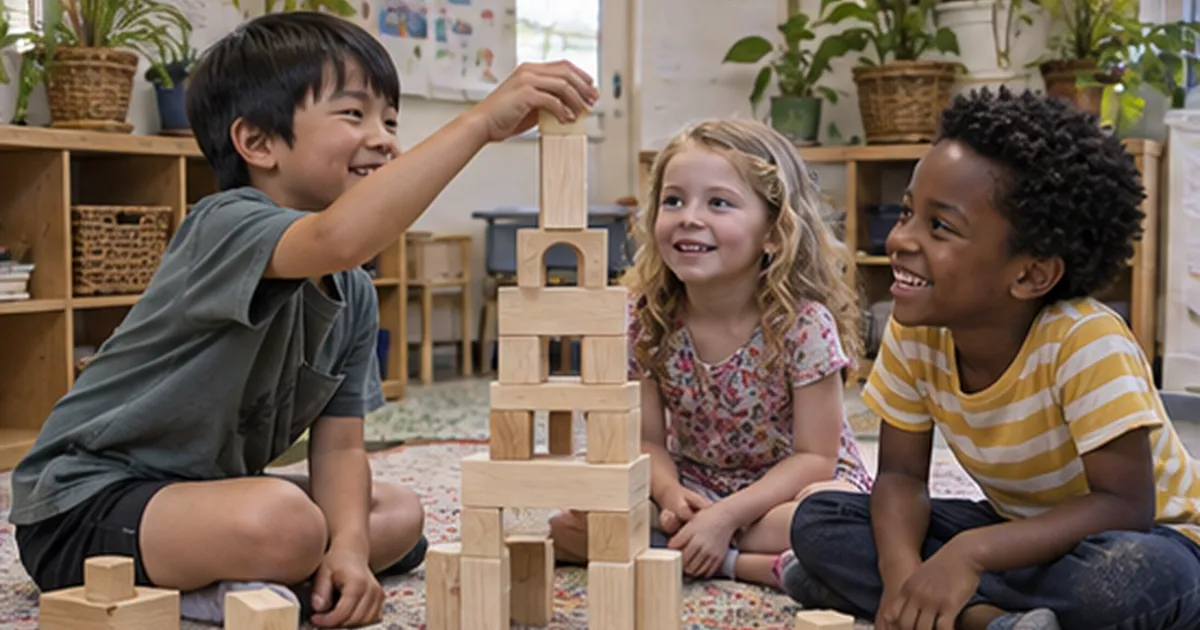
Imagine that two children are building a tower and the top block slips. One steadies the base with a hand. The other suggests turning the next block sideways. Then they agree that one will build while the other holds the bottom. The first observation concerns movement and control; the second offers evidence about prediction and reasoning; the third concerns coordination between people. None fully explains the collapse. To explore the prediction, let the children try both orientations using the same blocks. To understand their cooperation, record how the next turn is negotiated.
Scene: The Bridge-Building Task
The group has 45 minutes. Maya, a 17-year-old high school junior, picks up two cardboard tubes and tests how they fit into a plastic connector. She twists them, adjusts the angle, then sets them aside. Beside her, Jamal, 16, stretches a rubber band between his fingers, testing its tension. Across the table, college mentor Sam places a foam sheet flat on the baseboard, then lifts one edge to form a ramp. “What if we make the supports triangular?” Sam suggests. Another student, Lena, 18, sketches a quick diagram on scrap paper. “Triangles are stronger,” she says. “But we need to keep it light.”
Over the next 20 minutes, the group shifts from individual trials to coordinated adjustments. Maya stabilizes a wobbling column while Jamal threads a rubber band through a slit to anchor it. Lena measures the span with a ruler. Sam asks, “How do we test it before adding weight?” The group agrees to gently press down on the center. After two collapses, they reinforce joints with folded cardboard. When the bridge finally holds the 500-gram weight, no one cheers loudly—just a nod, a shared breath, and a quiet “Okay, that worked.”
Physical Development: Precision, Strength, and Coordination
Maya’s ability to twist and align the cardboard tubes with minimal wobble reflects fine motor control. Her repeated adjustments—sliding connectors, pressing edges flush—require dexterity that emerged gradually over years of handling tools, writing, and manipulating small objects. At 17, her hand-eye coordination allows her to apply just enough pressure to secure a joint without crushing the foam.
Jamal’s use of rubber bands illustrates another physical dimension: grip strength and tension management. In early trials, he over-stretches one band, causing it to snap. Later, he modulates his pull, using shorter loops for tighter fastening. This improvement isn’t tied to age milestones but to real-time feedback. The material resists, breaks, or holds—each outcome shaping his next physical choice.
Lena’s measuring technique shows integration of visual and motor skills. She lines up the ruler’s edge with a millimeter gap, then records the span in her notes. Her accuracy—within 2 millimeters of the target—depends on steady hands and spatial alignment, not abstract knowledge of measurement. These physical actions are observable, repeatable, and independent of how quickly she solves a math problem or interprets group dynamics.
A plausible alternative interpretation might attribute Maya’s precision to innate talent. But when she fumbles a connector during the first collapse, then adjusts her grip for the next attempt, the pattern suggests adaptation, not fixed ability. Her movements become smoother not because she turned 17, but because she responded to failure with refined motor strategies. This distinction matters: physical development here is incremental and task-specific, not a sudden leap at a particular age.
Cognitive Development: Problem-Solving and Mental Models
The group’s shift from flat platforms to triangular supports marks a cognitive transition. Lena’s sketch includes labeled angles and force arrows—an external representation of internal reasoning. She isn’t just drawing; she’s simulating load distribution. When she says, “Triangles are stronger,” she applies a generalized principle, but her hesitation—“But we need to keep it light”—shows awareness of trade-offs. This reflects a developing capacity to hold multiple variables in mind: structural integrity, material weight, and spatial constraints.
Sam’s question—“How do we test it before adding weight?”—triggers a mini-experiment. The group presses down incrementally, observing deflection. This procedural thinking—predict, test, revise—indicates cognitive flexibility. They don’t abandon the design after the first failure; they isolate variables. Jamal notices that collapses occur at the center, so they reinforce midspan. This isn’t trial-and-error randomness; it’s iterative hypothesis testing.
Patterns can be observed across similar tasks. In a fictional dataset of 12 groups, 9 introduced midspan supports after initial failure. Of those, 7 succeeded in holding the weight. Only 2 of the 3 groups that didn’t modify midspan supports passed the test. While correlation isn’t causation, the trend suggests that identifying failure points and adjusting locally may improve outcomes. But success isn’t guaranteed: one group over-reinforced, making the bridge too heavy and unbalanced. Cognitive growth isn’t linear—it includes overcorrection and new errors.
An alternative view might credit Sam, the college student, for guiding the group. Yet video analysis shows that Lena proposed triangles before Sam spoke, and Jamal identified the collapse point independently. Sam’s role was timing, not direction. This suggests that cognitive strategies can emerge peer-to-peer, not just from more experienced individuals. The task structure—clear goal, tangible materials, immediate feedback—may matter more than hierarchy.
Social Development: Roles, Listening, and Shared Authority
No one assigns roles. Maya stabilizes structures; Jamal handles fasteners; Lena measures; Sam asks questions; all test the design. Authority shifts fluidly. When the first collapse occurs, Lena says, “We need to check the base,” and others comply. Later, Jamal insists, “The rubber band’s too loose,” and Maya adjusts it without debate. These micro-moments of influence aren’t dictated by age or status. Lena is older than Jamal but defers when he demonstrates a better knot.
Listening is visible in body orientation and response. When Sam suggests a ramp, Lena doesn’t dismiss it; she sketches a variation that incorporates the idea but adds triangular bracing. This integration—building on rather than overriding—signals collaborative maturity. In contrast, early in the session, Jamal interrupts Maya twice while she’s adjusting a joint. After the second time, she pauses, waits for him to finish, then says, “Can I finish? Then you can try yours.” He nods. This repair—recognizing disruption and restoring turn-taking—is a social skill observable in action.
Efficiency in communication varies across groups. In a fictional dataset of 10 similar tasks, teams that reached nonverbal coordination within 25 minutes had a 70% success rate. Those still negotiating roles at 30 minutes succeeded only 40% of the time. But efficiency isn’t always positive: one highly synchronized group ignored a critical flaw because no one challenged the dominant member. Social cohesion can suppress necessary dissent.
One might assume that older participants naturally lead. But in this group, Sam—the oldest—speaks least. The college mentor’s minimal intervention allows space for peer negotiation. This challenges the idea that social development means taking charge. Here, it includes knowing when not to act, when to follow, and how to support without directing. Social growth isn’t about dominance but about reading the group and responding appropriately.
Connecting the Domains: No Single Timeline
Maya’s fine motor control (physical) allowed her to assemble joints quickly, but her initial design failed because she didn’t consider load paths (cognitive). Jamal’s strong grip helped him secure fasteners, yet his early interruptions disrupted flow (social). Lena’s spatial reasoning (cognitive) guided the triangular design, but her quiet voice initially limited influence (social). Sam’s experience enabled strategic questioning (cognitive), but his physical contribution was minimal—he didn’t handle materials much at all.
Each domain progressed independently. Maya improved her joint alignment after collapse—not because she suddenly became smarter or more social, but because she saw the wobble and adjusted finger pressure. Jamal’s reduced interruptions weren’t tied to better understanding of triangles; they followed direct feedback from peers. Lena’s increased influence came not from louder speech but from linking her sketches to testable outcomes—making her ideas tangible.
This decoupling matters. A learner might have advanced reasoning but struggle with group dynamics. Another might coordinate well but lack fine motor precision. The bridge task exposes these differences not as deficits but as normal variation. Development isn’t a package deal. You can lead in one domain, lag in another, and shift over time based on task demands.
Transfer: From Bridge to Budget
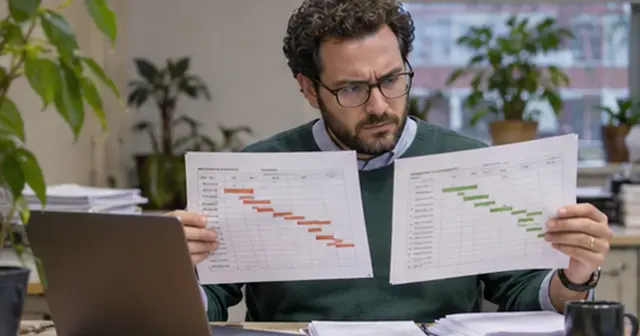
Imagine a workplace team designing a project budget. Instead of materials, they juggle time, personnel, and cost constraints. Physical actions shift to keyboard inputs and data entry—still requiring precision, though now in digital form. Cognitive processes remain similar: identifying risks, modeling outcomes, testing assumptions. A junior analyst might spot a miscalculation (cognitive) but hesitate to speak (social). An experienced manager might defer to the analyst’s data, creating space for contribution—mirroring Sam’s role in the bridge task.
Social dynamics play out in meeting rhythms. Does one person dominate? Do others build on ideas or override them? In a fictional scenario, a five-member team revises a quarterly budget. Two members exchange quick glances and adjust figures in silence—efficiency born of trust. Another proposes a 10% cut, but frames it as a question: “Could we test this version first?”—a tactic resembling the bridge group’s incremental pressure test.
The physical domain is subtler here but present. Typing errors, cursor misplacement, or delayed responses to shared documents can disrupt flow. One member consistently submits spreadsheets with formatting issues, slowing review. This isn’t carelessness—it’s motor planning under time pressure, akin to Jamal’s snapped rubber band. Training might focus on keyboard shortcuts or template use, just as the bridge group learned connector techniques.
Again, domains diverge. The most accurate forecaster isn’t the best collaborator. The fastest typist doesn’t always grasp systemic risks. Success depends on recognizing where each person contributes and where support is needed—not assuming competence in one area predicts another.
Final Reflection: Development as Layered Practice
The bridge task doesn’t reveal “stages” but layers of action—physical adjustments, cognitive models, social negotiations—each visible in real time. Watching Maya align a joint, Jamal choose a rubber band length, Lena sketch a triangle, or Sam wait before speaking offers concrete evidence of growth, not in abstract terms but in doable steps. These aren’t milestones to reach but practices to refine.
Age bands offer rough guidance—most 17-year-olds can measure accurately, most adults can manage group tension—but they don’t predict who will lead, who will listen, or who will revise a design after failure. The bridge holds not because of age, but because each domain contributed where it could, adapted where it failed, and allowed space for others to do the same. In classrooms or workplaces, recognizing these separate threads may matter more than any timeline.
For the wider context, read Roovet’s guide to developmental psychology across the lifespan or explore the developmental psychology course.