What Counts as Evidence of Object Permanence?
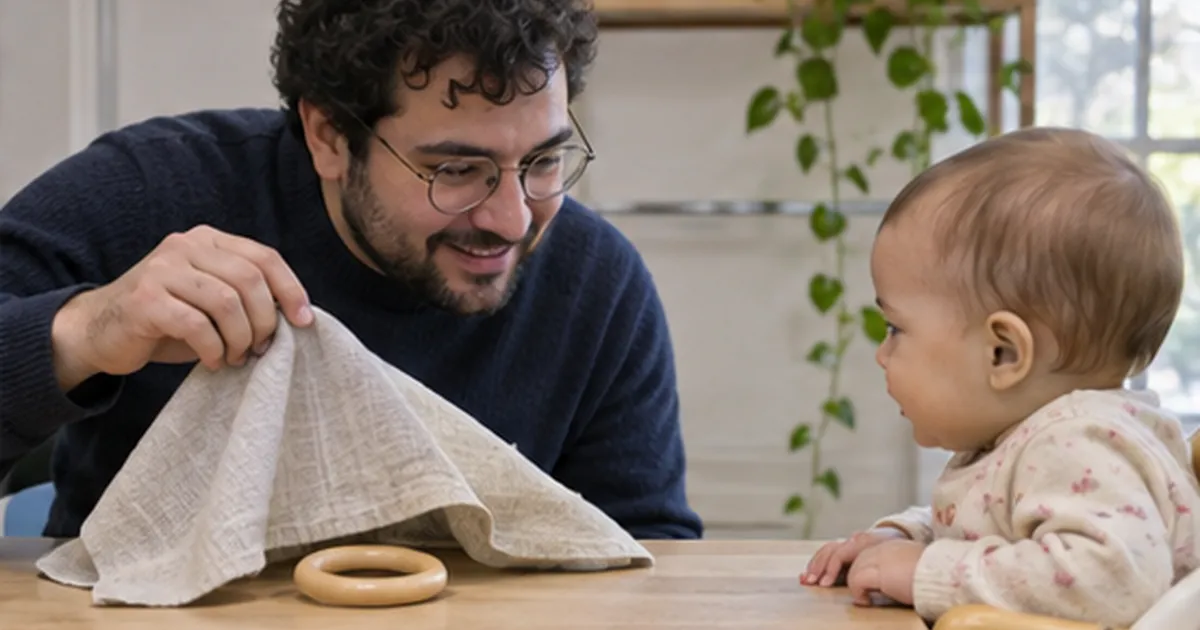
Object permanence—the understanding that objects continue to exist even when out of sight—is not proven by a single behavior but by a pattern of actions that distinguish true cognitive awareness from simpler responses. A 14-month-old named Maya sits on a padded mat, watching as a red rattle rolls behind a low cardboard screen. She does not reach for it. Moments later, when the rattle is placed behind a taller barrier requiring her to crawl around it, she pauses, then crawls to retrieve it. Is this evidence of object permanence? The answer depends on what behavior we observe: looking, searching, or navigating barriers, each shaped by different cognitive and motor demands.
Looking: Gaze as a Window, Not a Guarantee
Researchers often use looking time—how long an infant stares at a scene—as a measure of surprise or expectation. In Maya’s case, when the rattle disappears behind the low screen, she looks for 3.2 seconds. When it reappears, her gaze shifts away within 1.1 seconds. This pattern may suggest she expected the object to return—but expectation isn’t the same as belief in continued existence. A longer look might reflect novelty processing, not conceptual understanding.
Consider a fictional experiment with 12 infants aged 12 to 14 months. On average, they looked 2.8 seconds (SD = 0.7) when an object vanished behind a screen and 1.3 seconds (SD = 0.5) when it reappeared. While this difference suggests sensitivity to disappearance, it doesn’t confirm that infants mentally represent the object during occlusion. A plausible alternative: infants may simply detect visual discontinuity, reacting to the absence as a change in input rather than inferring persistence.
Moreover, looking behavior can be influenced by attention span, fatigue, or sensory preferences. A quiet infant might look longer not because of cognitive processing but due to lower arousal. Thus, while looking provides clues, it cannot alone establish object permanence. It reflects perceptual tracking, not necessarily conceptual continuity.
Searching: Action with Intent, But Not Always Insight
Searching—reaching or moving to recover a hidden object—is often seen as stronger evidence. When Maya crawls around the taller barrier to retrieve the rattle, she demonstrates purposeful action. In a structured session, she successfully retrieved the object in 7 of 10 trials when the barrier required circumvention. This suggests she anticipated the object’s location beyond the obstacle.
Yet, success in searching depends on more than cognition. In a fictional dataset of 20 children aged 13–15 months, 65% retrieved an object from behind a barrier when the path was clear. But when the path required crawling around a U-shaped partition, success dropped to 40%. Was this due to cognitive limits or motor coordination? The children who failed often looked toward the hidden object but did not initiate movement. Their gaze suggested awareness, but their bodies did not follow.
This discrepancy points to a key insight: searching integrates cognition and motor ability. A child may believe the object exists but lack the coordination to retrieve it. Alternatively, a child might search successfully through learned behavior—repeating actions that previously led to reward—without a full conceptual grasp. For example, Maya might have learned that moving around barriers sometimes leads to rattles, even if she doesn’t mentally represent the rattle during transit.
Thus, searching is more informative than looking but still not definitive. It shows goal-directed behavior, but the underlying reason—conceptual understanding or conditioned response—remains ambiguous without further context.
Barriers and Motor Demands: When Action Reveals Limits
The complexity of the barrier introduces another layer. In a controlled setup, three barrier types were tested: no barrier (object placed behind a transparent screen), low barrier (requiring a reach), and high barrier (requiring crawling around). Fictional data from 15 children showed retrieval rates of 93%, 73%, and 47% respectively. The decline correlates with increasing motor demand, not just cognitive load.
Maya, for instance, retrieved the rattle in 9 of 10 transparent-screen trials and 6 of 10 low-barrier trials. But with the high barrier, she succeeded in only 4 of 10 attempts. On failed trials, she often looked at the rattle, vocalized, and reached in the correct direction but did not complete the crawl. Her cognitive assessment seemed intact—she looked where the object was—but her motor system did not execute the full plan.
This dissociation suggests that motor demands can mask cognitive competence. A child might understand object permanence but fail to act on it due to immature coordination. Conversely, a child with strong motor skills might retrieve an object through procedural memory—like navigating a familiar path—without actively representing the object’s continued existence.
Therefore, barrier tasks do not cleanly isolate cognition. They test a system: perception, memory, intention, and motor execution. A child’s performance reflects the weakest link in that chain. A high failure rate at complex barriers may indicate motor immaturity, not lack of object permanence.
Interpreting the Evidence: What Each Behavior Can and Cannot Prove
No single behavior confirms object permanence. Looking suggests perceptual surprise but not conceptual belief. Searching indicates goal-directed action but may reflect habit or reward learning. Barriers reveal the interplay between cognition and motor ability, but success or failure cannot be attributed solely to understanding.
In Maya’s case, her consistent gaze toward the hidden rattle—even when she doesn’t retrieve it—suggests she mentally tracks its location. Her partial success with barriers indicates that her cognitive representation is present but not always accessible under high motor load. The most plausible interpretation: Maya has a developing sense of object permanence, but her ability to express it depends on task demands.
Alternative explanations remain possible. Her looking behavior could reflect a learned association: disappearance predicts reappearance, so she waits. Her searching could be cued by environmental triggers—like the sound of the rattle rolling—rather than internal representation. These alternatives remind us that behaviors are not direct readouts of thought; they are actions shaped by multiple systems.
Crucially, the same behavior can mean different things at different times. A 12-month-old who fails to search may lack the concept. A 14-month-old who fails may simply tire. A child who searches immediately may do so out of excitement, not understanding. Context, repetition, and variation in task design are necessary to distinguish patterns from noise.
Transfer to the Classroom: Observing Hidden Knowledge
The challenge of interpreting behavior extends beyond infancy. In a preschool classroom, a teacher hides a picture card under a basket during a game. Four-year-old Leo points to the basket and says, “It’s still there.” This seems like clear evidence of object permanence. But what if Leo has played the game before? His response may reflect memory of the rule—“cards go under baskets”—not a general principle of persistence.
To test transfer, the teacher varies the task. In one version, she pretends to hide the card but secretly keeps it. Leo still points to the basket. In another, she hides a different card. Leo names the original card, not the new one. His responses suggest he relies on routine, not real-time tracking.
Later, during outdoor play, a ball rolls under a bench. Leo runs to the other side and looks. He hasn’t been taught this action. When asked why, he says, “It went under. It’s still there.” This spontaneous action, in a novel context, carries more weight than his game responses. It shows transfer—a sign that the concept has generalized beyond specific cues.
Like Maya’s crawling, Leo’s run involves motor effort. But the context is unstructured, the reward uncertain. His action is not prompted, making it stronger evidence of internal representation. Still, we must be cautious. He might have learned that chasing balls leads to retrieval, without abstracting the idea of permanence.
The lesson for educators is not to assume understanding from a single demonstration. A child who names a hidden object in a quiz may be recalling a script. A child who retrieves a lost toy from under a couch may be applying a concept. The difference lies in novelty, spontaneity, and independence from routine.
Patterns Over Points
Object permanence is not a switch that flips but a capacity that emerges across contexts. Maya’s gaze, her partial success with barriers, and her eventual retrieval form a pattern more telling than any single act. Similarly, Leo’s game responses gain meaning when contrasted with his spontaneous action.
What counts as evidence, then, is not one behavior but the convergence of multiple behaviors across varying demands. Looking suggests attention to change. Searching suggests goal formation. Success under motor load suggests integration of cognition and action. But each can be explained by simpler mechanisms. Only when behaviors align—when a child looks, searches, and adapts to new barriers—does the weight of evidence support object permanence.
And even then, it is provisional. Development is not linear. A child may show understanding one day and not the next, depending on mood, context, or fatigue. Age bands provide rough guidance, but individual patterns matter more. A 14-month-old who doesn’t search may still mentally track objects. A 4-year-old who does may rely on habit.
In the end, evidence is not a verdict but a trail. It accumulates not in isolated acts but in the consistency of response across challenges. For learners, educators, and observers, the task is not to label but to watch—to notice not just what a child does, but how and when they do it, and what might explain it otherwise.
For the wider context, read Roovet’s guide to developmental psychology across the lifespan or explore the developmental psychology course.