What Does a Subject Matter Expert Do in I-O Psychology?
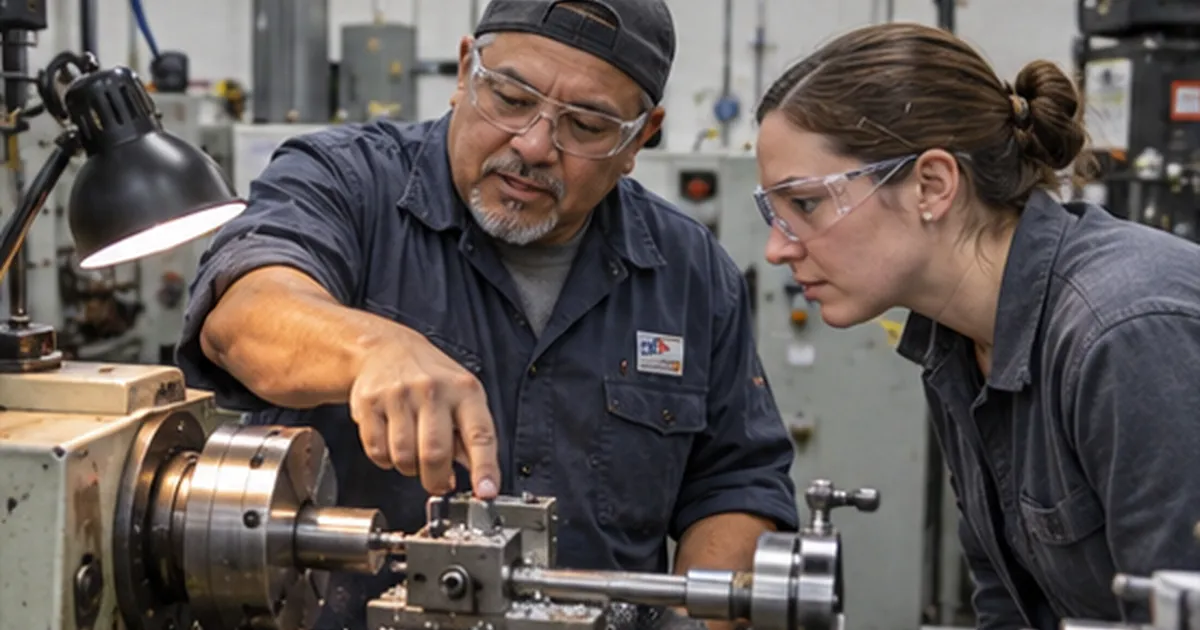
In industrial and organizational psychology, a subject matter expert, or SME, is someone with detailed knowledge of the particular work being studied. That might be a technician who performs a task, a supervisor who sees its consequences, or a trainer who observes where new workers make mistakes. The title belongs to the assignment. Someone can be an excellent source on how a machine is set up and know very little about how the next shift inspects the finished product.
Decide what you need the expert to know
Suppose a fictional repair department wants to train new staff to prepare equipment for a service call. The manager asks an I-O practitioner to interview “our best person.” That sounds efficient, but it leaves a question unresolved: best at what? The fastest worker may know the normal sequence exceptionally well. The person who investigates returns may know about mistakes that remain invisible until the equipment reaches a customer. A supervisor may know which tasks create the longest delays across the whole day.
Write down the decision the analysis will support. A training guide needs a description of how to do the work, where judgment matters, and what feedback a learner can use. A job description may need the range and purpose of responsibilities. A selection exercise needs evidence that the proposed task represents relevant work and that candidates can reasonably be expected to demonstrate it before training. Experts can contribute to each effort, but the questions they receive should differ.
Choose a set of viewpoints on purpose
In the repair department, begin with someone who regularly prepares a complete kit. Add a worker from a shift that handles late changes and a colleague who receives the finished kit in the field. Ask each person which variants they handle and which they rarely see. Someone who handles only routine weekday calls should not have to speculate about emergency work. Recording the boundary of a person's experience makes their contribution easier to interpret.
Length of service is useful background, but it is not the same as current exposure to the job. A former technician who became a supervisor three years ago may remember an older equipment layout. A recently trained technician may have fresh knowledge of the current instructions while lacking experience with unusual failures. Interviewing both can reveal which differences result from a changed process and which reflect a gap in training.
Think about the voices that are easy to miss. A person on the evening shift may be unavailable during a daytime meeting. A quiet expert may be reluctant to disagree with their supervisor in a group. Obtain a first description independently where practical, then bring people together to resolve specific differences. A group meeting is more productive when participants have examples to compare than when everyone is asked to agree immediately on a single list.
Ask for an incident, then reconstruct it
A broad question such as “What makes someone good at preparing a kit?” may produce words like careful, reliable, or experienced. Those descriptions are a beginning. Ask for the last time a worker caught a problem before the kit left the building. What was the first visible clue? What did the worker check next? What information made them decide to replace an item? Which part could an observer actually see?
Imagine a technician saying, “I could tell the adapter was wrong.” The analyst might ask the technician to place the two adapters side by side and describe the feature that matters. The expert points to a connector that fits the test device but not the field unit. Now the analyst can identify a trainable distinction: checking compatibility against the model requested for the visit. The incident has produced something more specific than reminding new staff to pay attention.
Follow the decision to its result. How did the technician discover that the replacement worked? Did someone verify it at the bench, or did the field team report back later? An expert may be highly certain that a particular action prevents a problem but never see the outcome. The analyst can record the explanation as a claim to verify and ask the receiving team what evidence they have. Respecting expertise includes distinguishing direct observation from informed inference.
Translate an expert’s language into a usable task statement
Consider the original phrase “make sure the kit is ready.” A more useful draft might read: “Compare the service request with the packed components and resolve any mismatch before releasing the kit to the field team.” This states an action, the material used, and the point at which the task ends. It still leaves open how the comparison happens for different types of calls. The expert can review whether the statement is accurate without having to approve an entire training manual.
Keep a separate record of what the worker needs to know. The ability to distinguish similar connectors helps explain how the task can be performed. It is not the same thing as the task itself. If a later team designs a practice exercise, it might give trainees a request, two plausible adapters, and a way to check their choice. If a manager redesigns the storage area, the same evidence might support better labels. The analysis identifies the work before deciding which remedy to build.
Interpret disagreement as information
Two experts give conflicting accounts. One says every kit receives a bench test. The other says that unopened replacements often leave without one. Before calling either person mistaken, ask for the conditions. One may handle repaired equipment and the other factory-sealed parts. A supervisor might describe the documented instruction while a technician describes what happens when the test station is occupied. Disagreement can uncover different tasks, different policies, or a gap between a standard and ordinary practice.
Make a brief comparison record. Note the disputed step, the conditions each expert described, the evidence available, and the person who can resolve any policy question. An observer can verify that employees sometimes bypass a station. Only the appropriate process owner can establish whether that practice is approved. A final job analysis should make those two findings distinguishable. Otherwise a training guide can accidentally turn a workaround into an official instruction.
Validate the draft with someone who did not write it
Give a different worker the draft and ask them to use it to explain one real task variation. They may notice that the guide tells the reader to verify a model number but never says where that number appears on a replacement request. Ask a supervisor whether the boundaries match responsibility: does the preparer resolve every mismatch, or does a field lead approve a substitution? These checks improve the description without claiming that every worker must perform every variation in exactly the same way.
Then test whether the document serves its intended reader. A new employee can tell you where the vocabulary is unclear even if they cannot yet judge every technical statement. A field technician can tell you whether a proposed practice kit represents the decisions the job actually requires. An analyst can check whether a rating form asks about observable actions or merely invites a general impression. Each person contributes a different kind of evidence.
The finished analysis should leave a clear trail from the original question to the final statement. In the repair example, the important discovery was a compatibility decision hidden inside the phrase “kit ready.” The expert recognized it, the analyst helped make it explicit, and other people checked its boundaries. That is the value of an SME in I-O psychology: making specialized knowledge available for a decision while preserving the conditions that give the knowledge its meaning.
For the wider context, read Roovet’s guide to industrial and organizational psychology or explore the social psychology course.


